





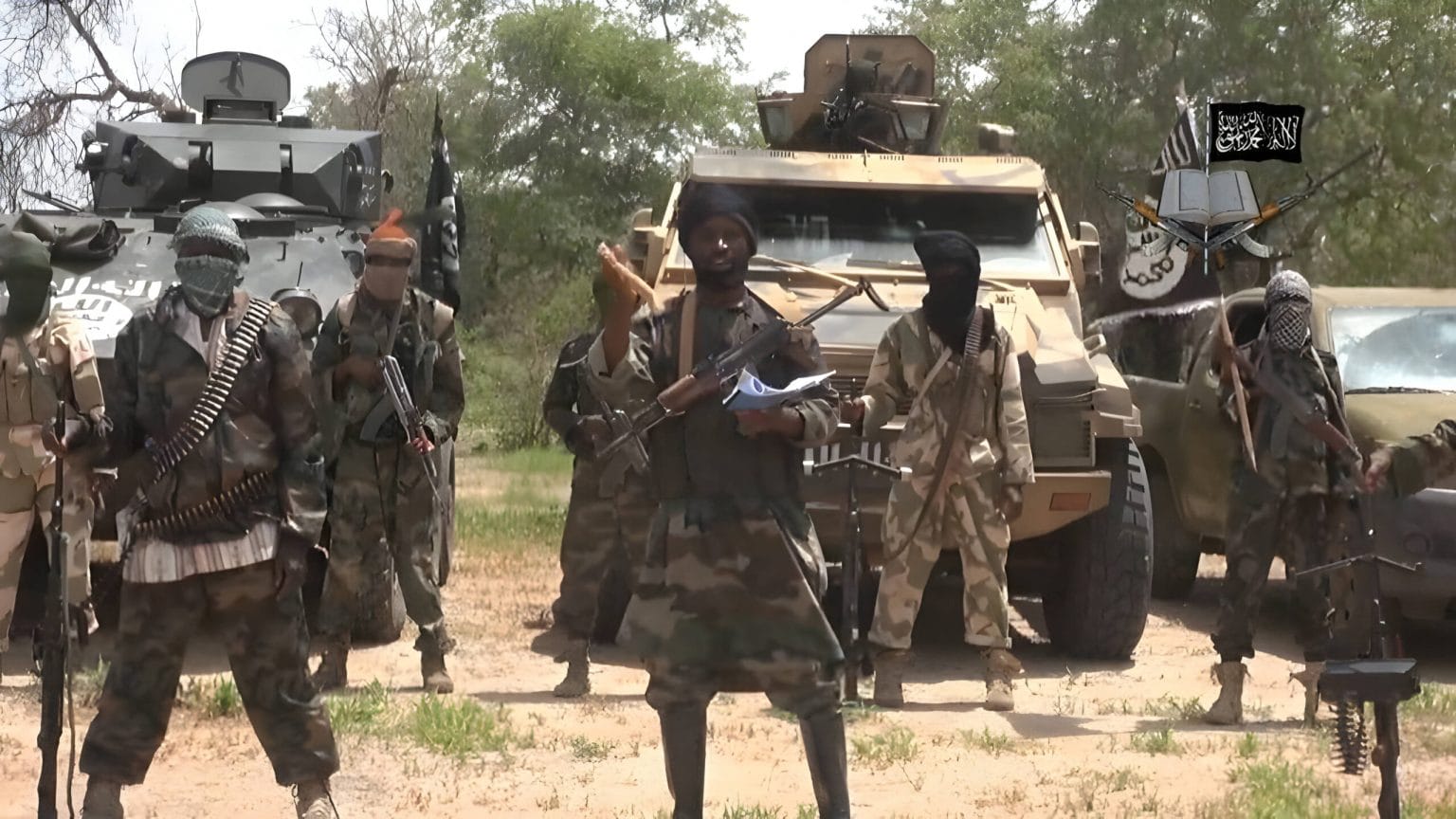
Armed with assorted weapons of death and terror, well-trained Boko Haram members roamed the fringes of the Lake Chad for years, some for over a decade, attacking communities across Borno, Yobe, and Adamawa states.
With the Operation Safe Corridor of the Nigerian military, many of them chose to lay down their guns and flee the bush, former well-armed insurgents making their way back to the society, uncertain of what lay ahead.
“I told myself one day that the life of a terrorist is a terrible one. So I quit but escaping the camp wasn’t an easy task,” said Liman, whose other names are withheld, according to Saturday Sun.
Like many others, Liman says he did not set out to join Boko Haram; circumstances forced him into it. He was intercepted and picked up by the insurgent fighters at Kross Kawa, a volatile area in the northern part of Borno while running for his life in 2014.
“I left Kukawa because people warned me I could be arrested by soldiers in a raid,” he told Saturday Sun in an interview. “Most of the boys i played with then had joined Boko Haram. So, I was afraid and attempted to run for my life,” he added, as he relaxed on a plastic chair at a rehabilitation centre in Maiduguri for surrendered fighters. Then he recounted the complex story of his failed escape.
From frying pan to fire
Liman walked straight into an insurgents’ roadblock at Kross Kawa. He and others were bundled into a waiting truck and taken into the forest.
“They asked us many questions from the Holy Qur’an and then separated us into different groups,” he said. “They pushed us into a vehicle and drove deep into the bush.”
He recalled how the insurgent leader informed them as soon as they got to the camp: “You’re here to do Allah’s work.”
He said they seized his phone as soon as they got to their camp at dusk. For two months, he could not communicate with his parents. He later learned that both had died. He also lost one of his brothers during that period — a development that changed his mindset about life. In the end, he resolved to stay with Boko Haram.
Life in Boko Haram camps
Life in the insurgents’ camps, according to some of the surrendered combatants, is regimented, brutal, and full of uncertainty. Food is rationed. Telephone use is forbidden except for top commanders.
“Fighters can only make calls in the presence of officers in charge, and they must return the phone immediately after,” Liman, a former armour bearer and fighter, said. “Only commanders are allowed to make or receive calls anytime, and even then, away from other fighters.”
This account was corroborated by Mohammed Ibrahim, another ex-fighter.
Persuaded by friends to join the jihad, Mohammed said he enlisted with Boko Haram in Damaturu, Yobe State. He was later moved to a camp in Gujba Local Government Area and took part in several attacks on communities. He eventually quit the terror group last year.
Regretting his years in the group, Mohammed said: “I would have done something meaningful with my life instead of bearing arms and engaging in violence for over a decade.”
Terrorist groups like Boko Haram and Islamic State West Africa Province (ISWAP) are not only about fighting. They also have strong unit for reorientation of new recruits and members on their belief.
Saturday Sun gathered that the groups’ leadership usually appoint known Islamic clerics among them to handle that duty.
Malam Bashir was a fiery preacher in Boko Haram camps. He worked closely with Abubakar Shekau, the group’s leader in Sambisa Forest, Boko Haram’s main operational base. He was later appointed Imam for Jumu’ah and Eid prayers, considered one of the most important positions for an Islamic cleric.
However, his exposition of Islamic matters put him in conflict with Shekau, who saw him as deviant from the group’s distorted beliefs.
How I escaped death in Sambisa
Bashir said his attempt to correct Shekau’s misrepresentation of the Holy Qur’an during sermons led to his imprisonment in Sambisa and a death sentence by the leader.
“I was locked up in jail in Sambisa. Later, someone came to tell me I would be executed after Sallah,” he disclosed.
“Ironically, ISWAP came and there was a serious fight with Boko Haram, and Shekau died during the battle. It was three days to Sallah. They freed me from the jail.”
The lies in terrorists’ enclaves
Misinformation and deliberate lies are strong weapons frequently used by Boko Haram and ISWAP to keep the fighting spirit of members alive, Bashir revealed.
Liman also corroborated this, adding that the groups often wrongly use the Quran to justify their hatred for government, democracy and elections.
Commenting further on the issue, Malam Bashir, the former cleric for Boko Haram, disclosed that the insurgents warned them against fleeing the camp
“They lied to us that the military would kill us, and that the government would inject us with strange drugs to kill us slowly. They scared us every time with such lies,” he said. But despite all that, he fled one day with his three wives and children.
Govt messages, family pressure encouraged us
Many of the insurgents said a combination of frustration exacerbated by the violent life in the bush and uncertainty of the supposed jihad forced them to drop their guns and surrender.
Liman left his assault rifle early in the morning in his make-shift house at the camp. He told this newspaper that he had told his commanders he was going to the farm with his wives and children, an excuse that drew the commanders’ curiosity.
“They queried me, saying why don’t you leave one of your wives? But I convinced them, and we left,” he said.
In his words, for days, he struggled to find his way to a military location where he finally surrendered.
Beyond the brutal camp life, some also said they escaped from the camps after receiving handbill messages in local languages dropped in the bushes sometimes near the terrorists enclaves by air.
“I fled the camp one day but was unable to come out with my family. It wasn’t easy. I finally succeeded,” Bashir disclosed.
For Idrissa, some of the messages posted on social media changed his perception. The urge to quit the Boko Haram camp became stronger after his mother called him on social media asking him to return home.
He also said others were encouraged to flee because of the various calls by family members and other ex-combatants on the social media, showing a better prospect to life outside the terrorists’ camps.
“I listened to my mother’ and friends on the social media, asking me to return. I’m glad I did,” Idrissa stated.
Over 100,000 insurgents and their families have surrendered voluntarily since the exercise started five years ago, according to military authorities in Borno. The mass surrender followed the launch of Borno Model in July 2021, a civil approach to depopulate the terrorist camps and tackle the protracted violence in the area.

