




The Human Rights Foundation (HRF) has classified Nigeria as ruled by a fully authoritarian regime in its latest global assessment of countries across the three pillars of electoral competition, freedom of dissent, and institutional accountability.
It posited that Nigeria’s electoral process, protection of dissent and institutional checks on executive power have deteriorated to levels inconsistent with democratic governance.
The assessment, published on the foundation’s Tyranny Tracker platform, places Nigeria in the fully authoritarian category after evaluating Nigeria fell short on all three.
“HRF classifies Nigeria as ruled by a fully authoritarian regime. Nigeria is a federal republic of 36 states with a presidential system of government,” the report read.
In a context, Nigeria was described as having an estimated population of 242.4 million people, representing about 2.9 per cent of the world’s population, stressing that the country’s democratic institutions have weakened despite more than two decades of uninterrupted civilian rule since 1999.
“Since gaining independence in 1960, Nigeria, Africa’s most populous nation, has grappled with ethno-political cleavages, which led to decades of political turmoil marked by a bloody civil war, a series of military coups, and secessionist and terrorist insurgencies.
“Since transitioning from military rule in 1999, Nigeria has experienced the longest period of elected civilian rule in its history, with seven consecutive elections and a peaceful transfer of power between a ruling and opposition party in 2015,” it added.
The foundation argued that successive administrations had increasingly consolidated authority across the executive, legislature and judiciary, resulting in weakened institutional checks and widespread impunity.
“Successive governments have consolidated control over all branches of government. With no meaningful checks to executive power, and an endemic culture of corruption, clientelism, and impunity, the country remains mired in a degenerating, multidimensional insecurity and maladministration crisis,” it said.
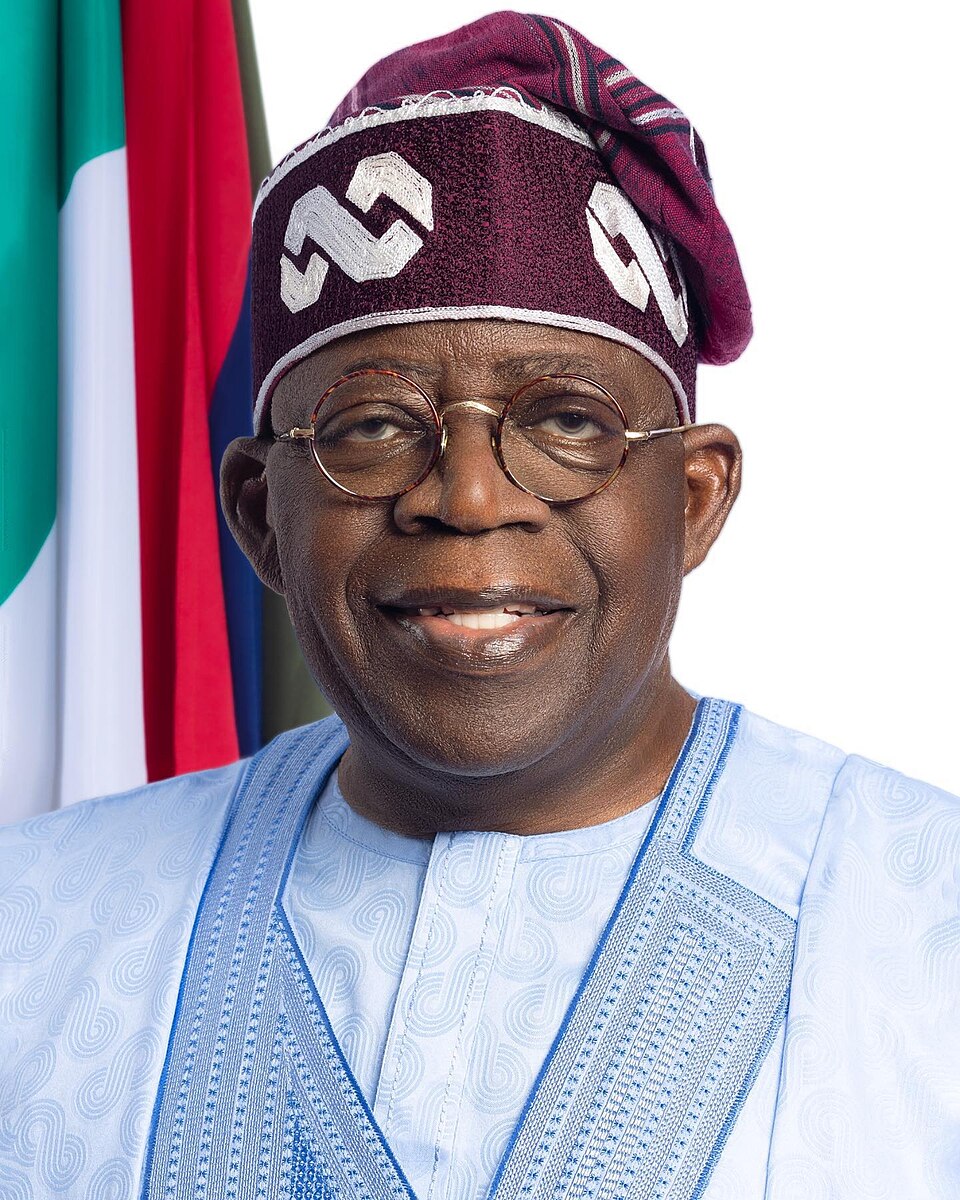
HRF noted that President Bola Tinubu emerged from the 2023 presidential election, which it described as flawed, citing legal disputes, protests, election-related violence, alleged irregularities, voter disenfranchisement and questions surrounding the integrity of the electoral process.
“The Head of State, Bola Tinubu, was declared the winner of the flawed 2023 election. Legal challenges, protests, and calls for annulment, violence that killed more than 100 people, the disenfranchisement of over one million people, and evidence of irregularities and manipulation discredited the integrity of the polls,” it said.
HRF added that the regime has seriously intimidated or obstructed the work of independent media, civil society leaders and organizations, and repressed dissenting protests against its most prominent and widely publicized policies
Institutions largely fail to serve as independent checks on the governing authority.
“Courts frequently and unfairly failed to check, or enabled, the regime’s attempts to significantly undermine electoral competition, repress criticism, or retaliate against those who express open opposition to its most prominent, widely publicized policies.
“The regime has seriously undermined institutional independence to the point where cases or issues challenging the regime are no longer brought or frequently dismissed. Judicial, legislative, or executive institutions systematically, frequently, and unfairly fail to hold regime officials accountable.
“The regime has subjected judicial and legislative institutions to reforms that abolish or seriously weaken their independence or operational effectiveness,” the report held.
It pointed out that electoral competition is significantly skewed in favor of the ruling party to the point where the real, mainstream political opposition has a highly unlikely, although realistic chance to win.
“The regime hinders opposition parties’ electoral campaign, engages in voting irregularities, enjoys significant and unfair campaign advantages, and undermines independent electoral oversight,” HRF said.
The report read further, “The regime unfairly and significantly hinders opposition parties’ electoral campaigns. The ruling APC leveraged its allies in control of 21 state governments throughout the country to restrict the opposition’s campaigning.
“These restrictions include limited access to venues and state media, as well as the imposition of excessively high fees for organizing rallies or placing billboards. For instance, in Zamfara State, the governor prohibited a political rally organized by the opposition party, the PDP, citing security concerns.
“Despite the ban, the PDP proceeded with the rally. In response, the governor ordered the closure of broadcast media organizations that covered the event, claiming they had violated government orders.
“Similarly, opposition parties in Kaduna State accused the state government of denying them the right to erect billboards. In Ebonyi State, the police dispersed a rally organized by Labour Party presidential candidate Peter Obi, claiming that he had not paid the required venue fees, even though Nigerian law does not require a police permit or payment before peaceful rallies or protests can be held.
“Non-state actors, with ties to the regime, have systematically contributed to the hindrance of a real, mainstream opposition party or candidate’s electoral campaign. In the months ahead of the 2023 election–amid widespread political thuggery and violence involving non-state actors aligned with both ruling and opposition parties—organized violent gangs and official vigilante groups aligned with the APC attacked opposition party rallies and supporters across several states, such as Borno, Lagos, Rivers, Katsina, Kogi, Kaduna, and Ogun. For example, in November 2022, armed thugs attacked Abubakar’s convoy during a campaign stop in Maiduguri and clashed with his supporters, resulting in scores of injuries. In Borno, in September 2022, APC politicians mobilized members of the Civilian Joint Task Force (CJTF)—a civilian vigilante group formed to fight Boko Haram terrorists– to harass PDP supporters. In November 2022, gunmen assassinated Victoria Chintex, a grassroots mobilizer for Obi in Kaduna state. In December, unknown attackers kidnapped Helen Taiwo Augustine, a leader of an Obi supporters group in Edo state. In January 2023, thugs attacked a rally of the opposition New Nigeria Peoples Party (NNPP) party in Ebonyi state, chasing supporters and vandalizing equipment. During the election in Lagos, masked gunmen opened fire at a polling station where many people said they intended to vote for Obi, and took away a ballot box. In a related incident in Lagos, a voter named Jennifer Efidi was attacked and stabbed by political thugs as she waited to cast her vote for Obi.
“In Nigeria, the regime systematically enjoys campaign advantages that undermine opposition parties’ ability to compete. With the ruling APC in control of the federal government and APC politicians serving as governors of 21 states, the ruling party went into the 2023 presidential election with significant incumbency advantages of nationally distributed power and control of public resources. The APC leveraged these advantages to tip the electoral campaigning field against political opponents. In October 2022, Rivers State Governor Nyesom Wike conditioned the use of public school facilities for political rallies on the approval of the state and imposed a fee for their use. Wike also encouraged local government executives to restrict political gatherings in their areas on the basis of vague security concerns. In January 2023, the Signage and Advertising Agency of Anambra state removed the Labour Party presidential candidate Obi’s campaign posters, citing failure to pay exorbitant fees imposed by the state on political advertising.
“The regime has engaged in systematic and significant voting irregularities. Despite substantial investments and deployment of human and material resources (including over 1 million election officials, over 100,000 vehicles) and new technology for voter verification and electronic transmission of results forms, the Buhari-appointed Independent National Electoral Commission (INEC) uploaded photo evidence of 2023 presidential vote counts with delay and released vote tallies with discrepancies and altered figures. The election was done with an unaudited voter registry, which included deceased, emigrated, migrated, and underage people and constituencies based on outdated census data from 2006. The irregularities observed under the ruling APC have also been present during previous governments in Nigeria, indicating a persistent systemic issue.
“In Nigeria, the regime systematically and seriously undermines independent electoral oversight. The Constitution mandates INEC with the authority of organizing and supervising elections, registering eligible voters and political parties, and overseeing electoral spending. The President of Nigeria is mandated to appoint non-partisan members following due consultation with the Council of State, an advisory body chaired by the President, and confirmation by the Senate. Tinubu’s regime has continued the Buhari practice of stacking INEC with allies. In November 2023, Tinubu and the APC-dominated Senate appointed partisan allies in strategic INEC positions in which they have oversight over the agency’s operations in various states. He also controversially increased the regional representation of the North West in the commission.
“Successive administrations have carried out controversial appointments of partisan commissioners into INEC ahead of elections. In June 2021, Buhari controversially nominated his aide and APC party member Lauretta Onochie as INEC Commissioner—a nomination so controversial that the Senate rejected her nomination. Ahead of the 2019 election, Buhari-appointed INEC chair Mahmood Yakubu put Amina Zakari, a lifelong friend and relative of Buhari, in charge of the national collation centre for elections, where official results would be announced. The executive, through the Ministry of Finance, controls the national budget allocations to INEC, further undermining its operational independence.”

