


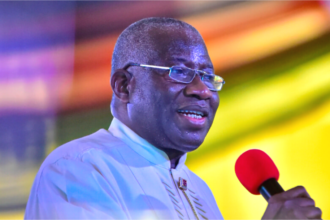




The Court of Appeal in Abuja on Thursday commenced hearings on multiple appeals challenging the legality of the Peoples Democratic Party (PDP) national convention that elected its current leadership. The case has drawn significant attention nationwide, as its outcome could influence the party’s internal cohesion and readiness for the upcoming elections. Political observers and party members alike are closely monitoring the proceedings, understanding that the decision could have lasting implications on both the leadership structure and the party’s credibility among its supporters.
The appeals contest the manner in which the convention was conducted, claiming that certain procedural irregularities compromised the legitimacy of the elected officials. Allegations range from the purported improper accreditation of delegates to disputes over voting processes and adherence to the party’s constitution.
Those filing the appeals argue that the convention failed to follow established protocols, thereby raising questions about the legality of the leadership’s mandate. They maintain that if these irregularities are confirmed, it could necessitate corrective action to restore transparency and internal democracy within the party.
On the other hand, the PDP’s current leadership insists that the convention was conducted in full compliance with the party’s constitution and established rules. Party spokespeople have dismissed the appeals as politically motivated attempts to destabilize the leadership and undermine the party’s unity ahead of critical electoral contests. They emphasize that the convention was inclusive and transparent, aimed at strengthening the party’s governance structure rather than creating internal conflict.
Top Society recalls that the timing of these appeals could not be more critical. With general elections approaching, any disruption to the leadership structure may affect the party’s ability to strategize and mobilize its supporters effectively. Analysts warn that a ruling against the current leadership could create a vacuum at the top, potentially triggering infighting and factionalism. In such a scenario, key figures within the party might be forced to reconsider their political alliances, which could have ripple effects on campaign planning and candidate selection.
Conversely, a ruling in favor of the current leadership would reinforce its position, providing the party with the stability needed to focus on election preparations. Supporters of the leadership argue that a favorable judgment would solidify internal discipline, discourage unwarranted challenges, and demonstrate the party’s resilience in the face of internal disputes. It could also reassure voters and stakeholders that the PDP is committed to maintaining a united front despite occasional disagreements among members.
Legal experts observing the proceedings stress that the Court of Appeal’s decision will have implications beyond the PDP alone. It could serve as a precedent for how political parties in Nigeria handle internal disputes and interpret their constitutions. In recent years, several political parties have experienced leadership crises following contentious conventions, with courts being called upon to resolve disagreements. How the appellate court rules in this instance may shape the manner in which future party conventions are conducted, potentially promoting greater transparency and accountability.
The appeals process has also ignited debate about the role of internal democracy in Nigerian political parties. Critics argue that political organizations must adhere strictly to their constitutions and allow for mechanisms of redress when disputes arise. They contend that ignoring procedural violations, even if the leadership is popular or influential, could undermine public confidence in the party and the broader political system. Supporters of the current leadership, however, maintain that the appeals are an attempt to interfere in the party’s internal affairs and could be motivated by political rivalries rather than genuine concern for procedural correctness.
Public interest in the case is particularly high because of the PDP’s historical significance in Nigeria’s political landscape. As one of the country’s major political parties, its internal disputes are often viewed as reflective of broader issues within national politics. Citizens and analysts alike are closely following the court proceedings, noting that the outcome could influence perceptions of party governance, fairness, and adherence to democratic principles.
The Court of Appeal’s handling of the matter will also be closely scrutinized for its adherence to legal standards and impartiality. Observers expect a thorough review of all submissions and evidence, including the accreditation of delegates, voting procedures, and compliance with party rules. Legal practitioners have noted that the court’s ruling must balance respect for party autonomy with the need to enforce accountability and prevent potential violations of established procedures.
For the PDP leadership, the appeal hearings present both a challenge and an opportunity. A successful defense could strengthen the leadership’s legitimacy and consolidate the party’s structure ahead of the election season. Conversely, any judgment against the current officials may compel the party to undertake corrective measures, reshuffle its leadership, or even organize a fresh convention to resolve lingering disputes. Either outcome is likely to attract intense attention from political commentators, party members, and the electorate.
Meanwhile, party members and supporters across the country are closely following developments. Many view the court’s intervention as a necessary step to ensure fairness and uphold the integrity of political processes. Others see the appeals as part of routine political contestation, arguing that disagreements over internal governance are expected in any vibrant political organization. Regardless of perspective, it is clear that the court’s decision will have lasting consequences for the party’s direction, unity, and strategic positioning.
As the hearings continue, the PDP faces a period of uncertainty that will test both its internal resilience and its ability to present a cohesive image to voters. The outcome will not only determine the future of the current leadership but may also set a benchmark for how political parties across Nigeria handle internal disputes and uphold democratic principles.
Ultimately, the Court of Appeal’s ruling will be pivotal in shaping the PDP’s organizational stability, electoral preparedness, and public perception. It underscores the importance of following party constitutions, maintaining transparency in leadership processes, and balancing internal democracy with effective governance. With the proceedings ongoing, all eyes remain on Abuja as the political landscape awaits the court’s decision and the potential implications for the country’s political future.

