






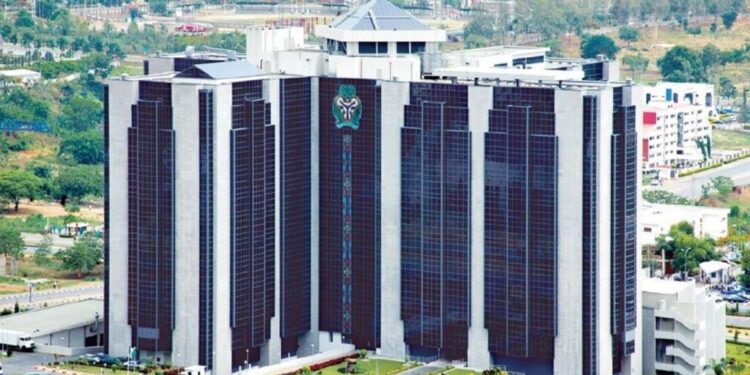
The latest Business Expectations Survey from the Central Bank of Nigeria (CBN) reports that businesses across the country identified inadequate electricity supply and insecurity as their most pressing operational challenges in March 2026, despite maintaining a broadly positive outlook on the economy.
The report released on Thursday is titled, “Respondents identified Insufficient Power Supply (74.5), Insecurity (70.9), High/Multiple Taxes (69.2), High Interest Rate (66.6), and Financial Problems (64.3) as the top five (5) business constraints in March 2026, highlighting factors that directly impact operational stability and profitability.”
Meanwhile, business owners have expressed concerns over the Financial Reporting Council of Nigeria’s (FRC) directive, mandating each director, three in all, to pay N50,000 to file companies’ financial returns.
Describing the move as unfair and harsh, a business owner, Bosun Solarin, lamented that small and medium entrepreneurs (SMEs) are over-taxed.
“Since the start of this year, the electricity situation has gone from bad to worse and the cost of diesel is unbearable. Now, we are being hit with this. I have not really produced anything this year because the cost of production is high, while purchasing power is very low.
“Despite all these problems, the government and its agencies are simply looking for new, creative ways to increase taxes and force us out of business.”
Solarin lamented that just last year, the Standard Organisation of Nigeria (SON) mandated all sales outlets to reject products that do not have SON numbers, even if they have been certified by the National Agency for Food and Drug Administration Control (NAFDAC).
Another entrepreneur, Sulaimon Babatunde, also decried the situation, saying businesses are being overtaxed. Regretting that most agencies have simply become rent-seeking rather than promoting the growth and survival of businesses, he said, businesses are failing at an alarming rate.
“There are too many levies, taxes and fees that are being demanded from us and we get nothing in return. Everyone wants to tax us, all the levels of government and their agencies, but nobody wants to help us. Now we are being asked to cough out N50, 000 per director for businesses that many people are struggling to stay afloat, it is unfair and unnecessary,” he said.
In the main, the CBN survey, conducted between March 9 and 13, 2026, covered 1,900 firms across industry, services, and agriculture, with a response rate of 99.7 per cent. Despite these constraints, businesses remained optimistic about the macroeconomic environment.
The apex bank noted that the confidence index stood at 15.6 points in March, reflecting positive sentiment, although slightly moderated compared to the previous month. The optimism is projected to rise to 43.9 points over the next six months.
Sectoral analysis showed that all sectors expressed confidence in the macroeconomy, with agriculture recording the highest optimism for the current month. The outlook across sectors remained positive in the near and medium terms, signalling sustained economic activity.
On regional performance, the survey showed that optimism was strongest in the North-East, which recorded 39.4 index points, while the South-East lagged behind with negative sentiment at –5.5 points.
However, all regions are expected to record improved outlooks in the coming months. The report also highlighted that firms anticipate growth in business activity. Respondents expressed positive expectations for volume of orders, business activity, financial condition, and access to credit during the review period, with projections indicating stronger performance in the next six months.
Employment and expansion indicators were similarly upbeat. Businesses signalled plans to increase hiring in April 2026, driven by expansion expectations. The Mining and Quarrying sector recorded the highest employment prospects, while agriculture showed the strongest expansion plans.
However, the CBN emphasised that structural challenges continue to weigh on business performance. Beyond power shortages and insecurity, firms cited high bank charges (63.5), an unfavourable economic climate (62.0), unclear economic laws (61.6), and an unfavourable political climate (60.4) among the top constraints.
At the lower end of the constraints ranking was access to credit, with an index of 57.7, indicating that while financing remains a challenge, it is less severe relative to other constraints.
The apex bank noted that the findings underscore the need for reforms in key areas.
“Overall, the findings in the review period highlight the need for improvements in energy supply, security conditions, and the regulatory/financial environment to enhance business stability and profitability,” the report added.
On exchange rate expectations, respondents projected that the naira would appreciate against the US dollar across the review periods. Firms also expressed a positive outlook on borrowing rates, suggesting expectations of a more favourable financing environment.
Meanwhile, average capacity utilisation across sectors stood at 52.5 per cent in March 2026, reflecting moderate use of installed capacity. Manufacturing recorded 54.4 per cent, agriculture 53.9 per cent, construction 52.7 per cent, while mining and quarrying, including electricity and water supply, posted 48.9 per cent.
The survey clarified that its findings represent the views of participating firms and do not necessarily reflect the position of the CBN.

