






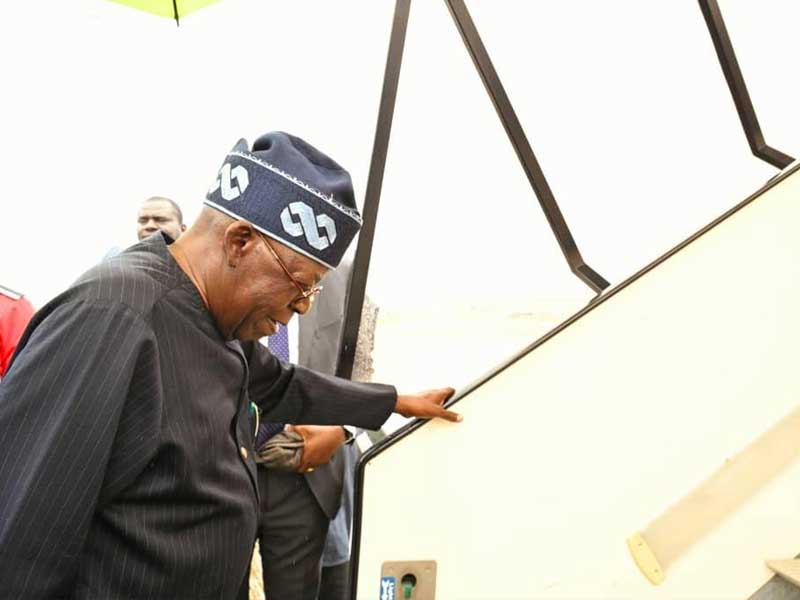
President Bola Ahmed Tinubu has officially begun a multi-nation diplomatic trip, departing Abuja today, May 2, 2026, for visits to France, Kenya, and Rwanda. The tour is part of a broader effort to strengthen Nigeria’s international relationships, attract investment, and deepen cooperation across key sectors.
The trip begins with engagements in France, where President Tinubu is expected to participate in high-level discussions tied to an Africa–France summit. The meeting will bring together leaders from across the continent and European partners to address issues ranging from trade and economic development to security and climate challenges. For Nigeria, the summit presents an opportunity to reinforce its position as a major player in shaping Africa’s global partnerships.
During his time in France, Tinubu is also expected to hold bilateral talks aimed at expanding economic ties, particularly in energy, infrastructure, and technology. France remains an influential partner in West Africa, and Nigeria is seeking to leverage that relationship to unlock new investment opportunities and technical collaboration.
Following the France leg of the trip, the president will travel to Kenya and Rwanda, two countries widely recognized for their growing economies and innovation-driven policies in East Africa. In Kenya, discussions are expected to focus on trade under the African Continental Free Trade Area (AfCFTA), as well as cooperation in digital economy initiatives and regional security.
The visit to Rwanda is also seen as strategic. Rwanda has gained international attention for its governance reforms and business-friendly environment, making it a valuable partner for knowledge exchange. Tinubu’s engagements there are likely to explore opportunities in governance innovation, tourism, and intra-African investment.
This diplomatic outreach comes at a time when Nigeria is navigating significant domestic challenges, including inflation, unemployment, and security concerns. By engaging with international and regional partners, the Tinubu administration aims to attract foreign direct investment, strengthen economic resilience, and build alliances that can support national development goals.
Analysts note that while such trips are important for diplomacy, their success will ultimately be measured by tangible outcomes. Nigerians will be looking for concrete results such as signed agreements, investment commitments, and partnerships that translate into jobs, improved infrastructure, and economic stability back home.
There is also a broader geopolitical dimension to the trip. As global powers increasingly compete for influence in Africa, Nigeria’s engagement with both European and African partners signals a balanced approach, one that prioritizes both external alliances and continental integration.
For many observers, the tour represents more than routine diplomacy. It reflects an attempt to reposition Nigeria on the global stage, not just as a participant but as a key driver of conversations around development, security, and economic transformation.
As the president continues his engagements across the three countries, attention will remain focused on what concrete gains Nigeria can secure and how quickly those gains can translate into meaningful improvements in the lives of its citizens.

