

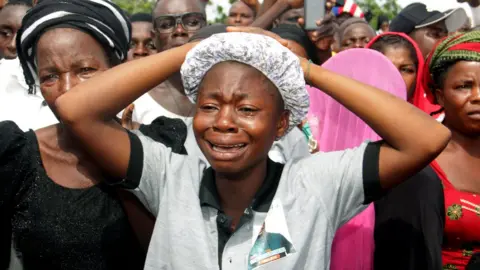
A fresh wave of concern has rippled across Nigeria after Amnesty International raised allegations that more than 150 internally displaced persons may have died in a military-run camp in Kwara State.
The claim, serious in both scale and implication, has been met with a firm and immediate denial from the Nigerian Armed Forces, setting the stage for a tense standoff between a global watchdog and national security authorities.
At the heart of the issue is the condition and management of camps housing vulnerable populations people already displaced by conflict, insecurity, or economic hardship. According to Amnesty, the deaths were not sudden or isolated but part of a broader pattern allegedly linked to poor living conditions, inadequate healthcare, and possible neglect within the camp. While the organization did not release full operational details publicly, it emphasized the urgency of an independent and transparent investigation.
The Nigerian military, however, has rejected the claims outright, describing them as “baseless” and “misleading.” Officials insist that the camp in question is being managed responsibly, with necessary provisions for food, medical care, and security. They argue that such reports risk undermining public confidence and could demoralize personnel working in already difficult environments.
This clash highlights a recurring tension in Nigeria’s security landscape: the balance between maintaining national stability and ensuring accountability in humanitarian settings. Camps for internally displaced persons (IDPs) have long been under scrutiny, especially in northern regions affected by insurgency. While Kwara is not typically at the center of such crises, the allegation broadens the conversation, suggesting that vulnerabilities may exist beyond the usual hotspots.
Human rights groups often rely on testimonies from survivors, satellite imagery, and local informants to piece together accounts in areas where access is limited. That method, while sometimes criticized by governments, has also historically brought hidden crises to light. On the other hand, military institutions tend to prioritize operational confidentiality and may view external scrutiny as a potential security risk.
For many Nigerians, the immediate question is simple: who is telling the truth? But the deeper issue is more complex. Even if the exact number of deaths is disputed, the situation raises concerns about oversight mechanisms in IDP camps. Are there enough independent monitors? Are healthcare services sufficient? How are grievances from camp residents handled?
Kwara State’s involvement also adds a new dimension. Traditionally seen as more stable compared to conflict-heavy regions like Borno or Zamfara, the state now finds itself unexpectedly in the national spotlight. Local authorities have yet to provide a detailed response, but pressure is likely to mount for clarity and reassurance.
The call for investigation is not unusual in cases like this. Amnesty and similar organizations typically push for probes not only to establish facts but also to ensure accountability if wrongdoing is found. In many instances globally, such investigations have led to reforms, policy changes, or at least improved transparency.
However, skepticism exists on both sides. Some Nigerians question Amnesty’s reports, viewing them as sometimes exaggerated or lacking full context. Others, wary of official denials, argue that without independent verification, the truth may remain obscured. This divide reflects a broader trust gap between institutions and the public.
Beyond the immediate controversy, the situation underscores a larger humanitarian challenge. Nigeria continues to grapple with internal displacement driven by insecurity, climate pressures, and economic instability. Managing these populations requires not just logistical coordination but sustained investment in welfare, infrastructure, and monitoring systems.
If the allegations prove accurate, the implications would be severe pointing to systemic failures in protecting some of the country’s most vulnerable citizens. If they are false or exaggerated, it raises questions about the verification processes of international organizations and the potential consequences of misinformation.
Either way, the need for clarity is undeniable. An independent investigation, whether led by a neutral government panel, international observers, or a joint committee could help bridge the credibility gap. Transparency in findings, backed by verifiable data, would go a long way in restoring public trust.
For now, Nigerians are left with two conflicting narratives: one of alleged tragedy and neglect, the other of denial and defense. The truth likely lies in evidence that has yet to be fully examined or publicly shared. Until then, the story remains not just about what happened in a camp in Kwara, but about how Nigeria navigates the delicate intersection of security, accountability, and human rights.