






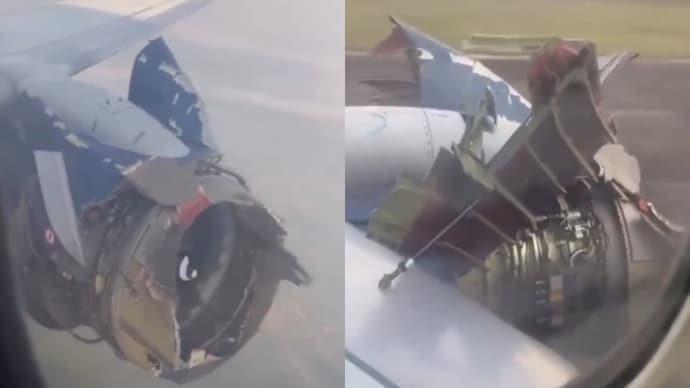
Passengers aboard an Arik Air flight experienced moments of intense fear after one of the aircraft’s engines reportedly exploded mid-air while en route from Lagos to Port Harcourt. The aircraft, a Boeing 737, was forced to make an emergency diversion as the flight crew acted swiftly to stabilize the situation and ensure the safety of everyone on board.
According to preliminary accounts from passengers, the incident occurred less than an hour into the flight. A loud bang was heard from one side of the aircraft, followed by noticeable vibrations and visible signs of distress from the affected engine. Some travelers reported seeing sparks and smoke, triggering panic in the cabin as uncertainty spread among those seated near the wings.
Despite the alarming circumstances, the flight crew maintained composure. The pilots quickly informed air traffic control of the emergency and initiated standard safety protocols. Oxygen masks were not deployed, and the cabin crew moved promptly to reassure passengers while ensuring that safety measures were strictly observed. The captain announced that the aircraft would divert and return for an emergency landing rather than continue the journey.
Aviation experts note that modern commercial aircraft, including the Boeing 737 series, are designed to remain airborne safely even if one engine fails. Twin-engine jets are certified to operate on a single engine long enough to land at a suitable airport. This engineering redundancy, combined with rigorous pilot training, often prevents engine incidents from escalating into catastrophic outcomes.
The aircraft reportedly circled briefly to burn excess fuel and prepare for landing before touching down safely. Emergency response teams were positioned on standby at the airport runway, ready to intervene if necessary. Upon landing, the plane was met by fire and rescue personnel who conducted precautionary inspections before passengers were allowed to disembark.
No fatalities or serious injuries were reported, though several passengers described the ordeal as traumatic. Some recounted prayers being said aloud, while others admitted bracing for the worst when the explosion occurred. Many praised the professionalism of the crew, crediting their calm instructions for preventing chaos inside the cabin.
The airline issued a statement confirming that the aircraft experienced an engine malfunction and that the crew followed established emergency procedures. The company emphasized that passenger safety remains its highest priority and assured the public that a full technical investigation would be conducted to determine the precise cause of the engine failure.
Industry observers say engine explosions, though rare, can occur due to mechanical faults, bird strikes, foreign object damage, or internal component failure. Aviation authorities typically mandate immediate inspections of the affected aircraft and sometimes similar fleets to rule out systemic issues.
Maintenance records, flight data recorders, and cockpit voice recordings are also reviewed to piece together the sequence of events.
The Nigerian Civil Aviation Authority is expected to oversee the investigation in collaboration with technical experts. Such investigations often focus on whether maintenance protocols were properly followed, whether there were prior warning signs, and whether manufacturer advisories had been implemented. Findings could lead to recommendations for additional inspections or procedural updates across the industry.
Air travel remains one of the safest modes of transportation globally, despite occasional high-profile incidents that draw public attention. Statistics consistently show that commercial aviation accidents are extremely uncommon compared to other forms of travel. Nevertheless, incidents like this reignite conversations about aircraft maintenance standards, regulatory oversight, and the financial pressures airlines sometimes face in challenging economic climates.
In recent years, Nigeria’s aviation sector has been working to rebuild public confidence amid economic fluctuations and operational constraints. Airlines operating within the country must balance rising operational costs, currency volatility, and infrastructure limitations while maintaining strict safety compliance. Episodes like this underscore the importance of sustained investment in maintenance, pilot training, and oversight mechanisms.
Passengers affected by the incident were reportedly offered support and arrangements for onward travel. Some travelers expressed gratitude for surviving the ordeal, while others called for more transparency about aircraft maintenance practices. Social media quickly amplified videos and firsthand accounts, with many Nigerians debating airline safety standards and sharing similar past experiences.
Aviation analysts stress that while the visual and auditory impact of an engine explosion can be frightening, aircraft are engineered with multiple layers of protection. Engine casings are designed to contain internal damage, preventing debris from compromising the fuselage.
Additionally, pilots undergo simulator training for engine failure scenarios to ensure quick, decisive responses.
As investigators begin their work, the focus will remain on determining whether the incident was an isolated mechanical fault or part of a broader issue. For now, the safe landing serves as a testament to the effectiveness of established aviation safety systems. Though terrifying for those on board, the outcome reinforces a critical reality of modern air travel: preparedness, training, and engineering safeguards often make the difference between disaster and safe return.
For the passengers who lived through the experience, the flight will likely remain unforgettable. But for aviation authorities and the airline industry, it represents another reminder that vigilance, transparency, and accountability are essential to maintaining public trust in the skies.

