






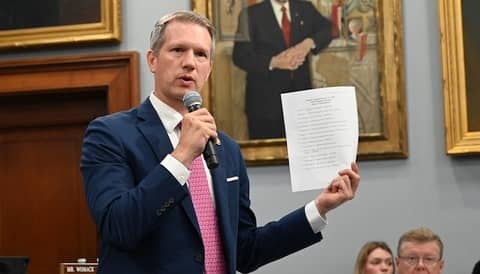
A United States lawmaker has drawn international attention to Nigeria’s ongoing security challenges after describing the past week as particularly “bloody for Christians” in parts of the country. The remarks, made during a public engagement, have reignited debate about the nature of violence in Nigeria and the urgent need for stronger protection of vulnerable communities.
The statement followed reports of deadly attacks in several rural areas, especially in the Middle Belt and parts of northern Nigeria. According to local accounts, armed assailants stormed villages, leaving dozens dead and many others injured. Homes were reportedly set ablaze, forcing families to flee into nearby towns and displacement camps. In some communities, places of worship and other structures were damaged, further heightening fears among residents.
The U.S. lawmaker expressed concern that the frequency and severity of such incidents point to a worsening humanitarian situation. He urged Nigerian authorities to intensify efforts to secure affected regions and ensure that perpetrators are brought to justice. Emphasizing the importance of religious freedom and the protection of civilian lives, he called for sustained action rather than temporary responses after tragedies occur.
Nigeria has faced a complicated security landscape for over a decade. Insurgency in the northeast, armed banditry in the northwest, communal clashes in the Middle Belt, and separatist tensions in the southeast have collectively strained national security resources. While some attacks have been attributed to extremist groups, others stem from longstanding disputes over land, grazing routes, and local political rivalries.
Government officials in Nigeria have often maintained that many of these violent incidents are driven more by criminal activity and resource competition than by religious motives alone. They argue that reducing the crisis to a single narrative risks oversimplifying deep-rooted socio-economic and governance issues. Nevertheless, community leaders in affected areas say the pattern of attacks has left many residents feeling targeted and unprotected.
Security agencies have responded to the recent violence by deploying additional personnel and launching investigations. Military patrols have reportedly been increased in high-risk areas, while intelligence efforts are being strengthened to track down armed groups responsible for the assaults. Authorities have also reassured the public of their commitment to restoring peace and preventing retaliatory attacks.
Despite these measures, critics argue that responses often come too late. Many rural communities lack adequate security presence, making them vulnerable to sudden raids.
Delays in response times and challenges in terrain have complicated rescue efforts, leading to significant casualties before help arrives. Civil society groups are calling for improved early-warning systems, better coordination among security agencies, and stronger community policing initiatives.
The humanitarian impact of the violence is significant. Displaced families frequently seek shelter in overcrowded camps or with relatives in safer towns. Access to food, healthcare, and clean water becomes limited, particularly for children, pregnant women, and the elderly. Aid organizations warn that without prompt intervention, secondary crises such as disease outbreaks and malnutrition could worsen the situation.
Religious leaders across Nigeria have reacted with mixed emotions. It was gathered by Top Society News, that Christian associations have demanded decisive steps to protect congregations and rural settlements, while Muslim leaders have condemned the killings and cautioned against framing the crisis in ways that could inflame sectarian tensions. Many faith-based organizations continue to advocate interfaith dialogue as a means of fostering unity and preventing cycles of revenge.
The international dimension of the issue adds another layer of complexity. Nigeria and the United States maintain close ties in areas such as counterterrorism cooperation, economic partnerships, and diplomatic engagement. Public criticism from American officials may increase pressure for reforms, but it must be balanced with respect for Nigeria’s sovereignty and internal processes. Diplomatic observers suggest that constructive collaboration, rather than public confrontation, is more likely to yield sustainable results.
Analysts point to several underlying drivers of insecurity, including high youth unemployment, poverty, weak local governance, and the proliferation of small arms. In regions where livelihoods depend heavily on agriculture and grazing, environmental pressures and shrinking resources have intensified disputes between farmers and herders. Without comprehensive economic reforms and rural development programs, security operations alone may not fully address the problem.
Public reaction within Nigeria has been varied. Some citizens welcome international scrutiny, believing it may prompt stronger accountability and faster reforms. Others caution against narratives that portray the violence as affecting only one group, noting that Nigerians of multiple faiths and ethnicities have suffered from the broader insecurity crisis.
As discussions continue, the focus remains on how to prevent further bloodshed. Strengthening intelligence gathering, investing in local policing, ensuring swift prosecution of offenders, and promoting inclusive development policies are widely regarded as essential steps. Equally important is fostering trust between communities and security institutions, which many experts say is crucial for long-term stability.
The U.S. lawmaker’s comments have once again placed Nigeria’s security challenges under the global spotlight. While the description of a particularly violent week may capture immediate attention, the broader issue is ongoing and deeply rooted. For millions of Nigerians living in vulnerable regions, the hope is that renewed attention both domestic and international will translate into meaningful action that restores safety, rebuilds trust, and secures lasting peace.

