



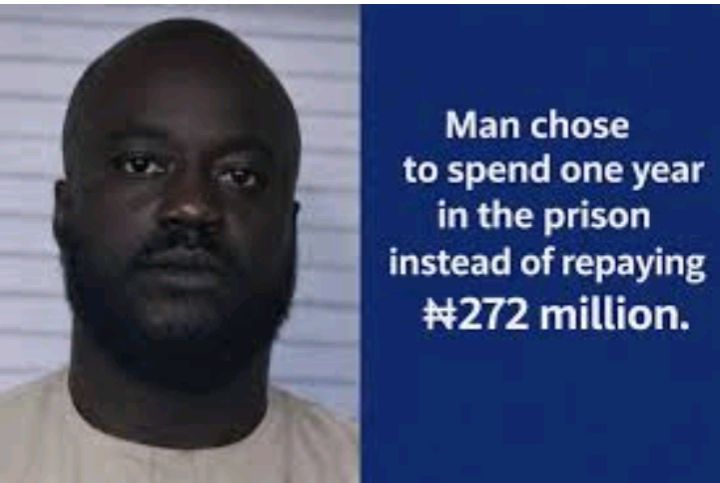
A Nigerian man has been sentenced to prison after refusing to return over ₦1.5 billion that was mistakenly credited to his bank account, a case that has sparked widespread public debate on social media and raised fresh concerns about accountability in the banking system.
The defendant, identified as Ojo Eghosa Kingsley, reportedly received the huge sum following an internal error by a commercial bank. Instead of reporting the anomaly, investigations revealed that he proceeded to withdraw and transfer large portions of the funds over several months for personal use.
The matter was taken up by the Economic and Financial Crimes Commission (EFCC), which arrested and charged him with theft and unlawful conversion of funds. During proceedings at the Edo State High Court in Benin City, Kingsley pleaded guilty to the charges.
In its judgment delivered in January 2026, the court sentenced him to one year imprisonment, with an option of paying a ₦5 million fine. The court also ordered that the remaining balance of the misappropriated funds estimated at over ₦270 million be refunded to the bank. However, reports from the trial indicated that the defendant expressed a preference for serving the jail term rather than returning the outstanding amount.
Before sentencing, authorities were able to recover a significant portion of the money from accounts linked to the defendant and his associates, while the bank reversed several transfers made shortly after the error was discovered.
The case has generated intense public reaction, with many Nigerians questioning the proportionality of the sentence compared to the amount involved, while others argue that the ruling reinforces the legal principle that funds received in error remain the property of their rightful owner.
Legal experts note that under Nigerian law, failure to report or return money mistakenly credited to one’s account constitutes a criminal offence, regardless of how the funds were obtained. They warn that the case should serve as a cautionary tale to bank customers on the consequences of exploiting financial errors.
As conversations continue online, the incident has once again highlighted the need for stronger banking controls, faster error detection systems, and greater public awareness of financial and legal responsibilities.