


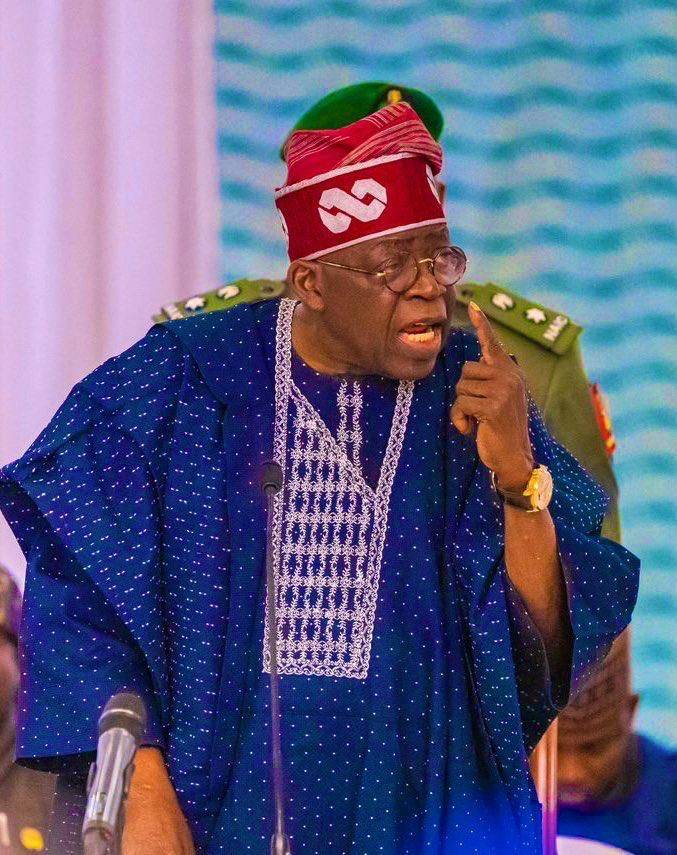
Former Rivers State Governor and former Minister of Transportation, Rotimi Amaechi, has dismissed President Bola Ahmed Tinubu’s long-standing claim that he was solely responsible for Muhammadu Buhari’s emergence as Nigeria’s president in 2015, insisting that Buhari’s victory was the result of a collective political effort rather than the influence of any single individual.
Amaechi made the remarks during a recent television interview where he addressed growing political conversations surrounding the 2015 general election and the roles played by key figures in the formation of the All Progressives Congress (APC). His comments have sparked fresh political debate, especially as political realignments ahead of the 2027 elections begin to take shape.
According to Amaechi, while Tinubu played an important role in the coalition that brought together opposition forces to challenge the then-ruling Peoples Democratic Party (PDP), it would be inaccurate for anyone to claim sole credit for Buhari’s historic victory.
He stressed that Buhari’s success at the polls came from the sacrifice, planning, and coordination of several influential politicians and party stakeholders who worked tirelessly to build a united front capable of defeating the incumbent administration at the time.
Amaechi particularly pointed to his role as Director-General of Buhari’s 2015 presidential campaign, noting that he was deeply involved in mobilising support across the country, coordinating campaign activities, and ensuring strategic political alliances remained intact throughout the election period.
He argued that the campaign was a carefully coordinated national project involving governors, lawmakers, party leaders, and grassroots supporters who all contributed to securing Buhari’s eventual victory.
The former minister also explained why he had remained silent about Tinubu’s repeated assertions in the past. According to him, speaking publicly against such claims while serving in Buhari’s cabinet would have created unnecessary political tension and could have been interpreted as disloyalty within the administration.
Amaechi maintained that his silence should not be mistaken for agreement, adding that historical accuracy matters, especially when political narratives are being shaped for future generations.
The exchange highlights a growing rivalry among prominent APC figures as internal power struggles and differing accounts of past political victories continue to emerge within the ruling party.
Political analysts believe Amaechi’s remarks may signal deeper divisions within the APC, particularly as discussions around the 2027 presidential election gather momentum.
Tinubu has on several occasions publicly stated that his political machinery and strategic influence were central to Buhari’s victory in 2015. Supporters of the president often point to his role in engineering the merger that birthed the APC and his ability to rally political heavyweights behind Buhari’s candidacy.
However, Amaechi’s latest comments challenge that narrative, insisting that no single politician can claim ownership of what was widely seen as one of Nigeria’s most significant democratic achievements.
The 2015 election marked the first time an incumbent president was defeated at the ballot box in Nigeria, making Buhari’s victory a watershed moment in the country’s democratic history.
As reactions continue to trail Amaechi’s comments, many observers see the development as a reflection of shifting loyalties and emerging political calculations ahead of another crucial electoral cycle.
Whether Tinubu responds directly or chooses to remain silent, the disagreement has reopened old political debates and once again placed the spotlight on the power dynamics that shaped Nigeria’s political transformation in 2015.