
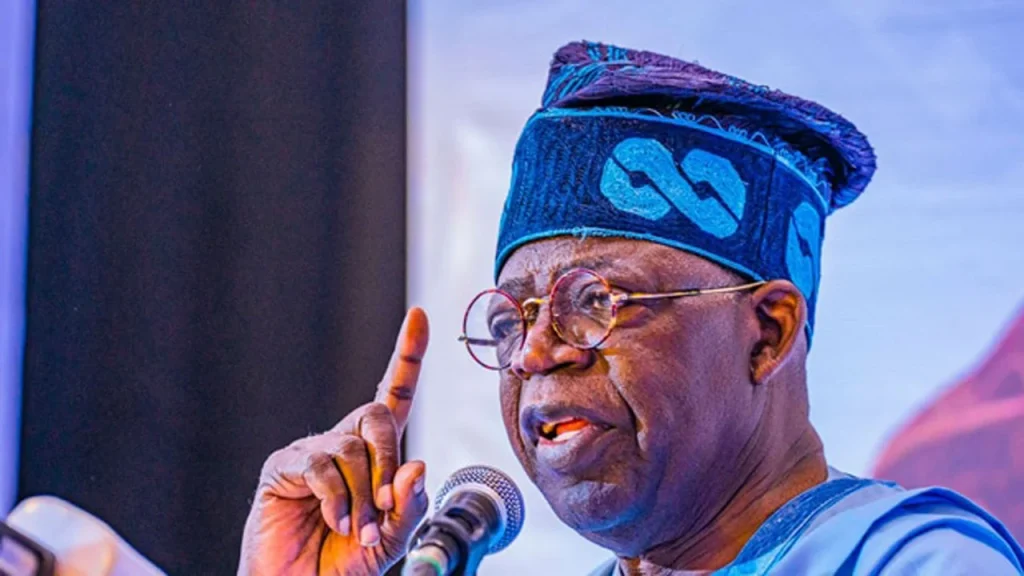
President Bola Ahmed Tinubu has called on African leaders to strengthen unity and collective action in addressing attacks against Africans living in South Africa, warning that discrimination and violence among Africans undermine the continent’s vision of integration and development.
Tinubu made the call during the 69th Ordinary Session of the Authority of Heads of State and Government of the Economic Community of West African States (ECOWAS), where regional leaders discussed pressing political, economic, and security challenges affecting West Africa and the wider continent.
The Nigerian leader expressed concern over recurring incidents of hostility directed at foreign nationals, particularly Africans residing in South Africa, describing such acts as unacceptable and inconsistent with the ideals of African brotherhood.
According to Tinubu, Africa’s progress depends on cooperation, mutual respect, and the free movement of people across the continent. He stressed that Africans should not become victims of discrimination in other African countries, noting that xenophobic violence threatens the unity required to achieve sustainable development.
He urged African governments to work together through diplomatic channels and regional institutions to address the root causes of xenophobia, including economic hardship, unemployment, and misinformation that often fuel resentment against migrants.
“An attack on one African is an attack on the collective dignity of the continent,” Tinubu was quoted as saying, emphasizing the need for stronger mechanisms to protect Africans wherever they live within the continent.
The President’s remarks come amid renewed concerns over attacks and discrimination against foreign nationals in parts of South Africa. Over the years, several African migrants, including Nigerians, have reported cases of harassment, violence, and economic discrimination, leading to diplomatic tensions between South Africa and other African nations.
Nigeria, as Africa’s most populous country and one of the continent’s largest economies, has frequently called for the protection of its citizens abroad. The Federal Government has previously engaged South African authorities over incidents involving Nigerian nationals and has demanded improved security measures.
Tinubu noted that while countries have the right to address their internal economic challenges, blaming foreigners for unemployment and social problems is not a sustainable solution.
He encouraged African leaders to focus on creating more economic opportunities, improving governance, and strengthening cooperation rather than allowing divisions based on nationality.
The ECOWAS meeting provided a platform for discussions on issues affecting the region, including security threats, economic integration, political stability, and the future of African cooperation.
The President highlighted the importance of ECOWAS and other continental bodies in promoting peace and stability. He said regional organizations must continue to play active roles in protecting citizens and ensuring that the principles of unity and solidarity remain central to Africa’s development agenda.
Tinubu also linked the issue of xenophobia to the broader goals of the African Continental Free Trade Area (AfCFTA), which seeks to promote trade and economic collaboration among African countries.
He argued that economic integration cannot succeed if Africans face hostility when doing business, working, or living in other African nations.
“Free movement of people, goods, and services is essential for Africa’s growth,” he said, adding that governments must build trust among citizens to support continental integration.
The President’s position reflects Nigeria’s long-standing advocacy for the rights and welfare of Africans across borders. Nigeria has historically played a leading role in African affairs, contributing to peacekeeping missions, regional diplomacy, and economic initiatives.
Experts have noted that xenophobia remains a complex issue linked to poverty, inequality, unemployment, and political tensions in some African countries. They argue that addressing the problem requires more than condemnation, with governments needing to tackle economic challenges that create competition and resentment among communities.
Civil society groups have also called for stronger laws and enforcement mechanisms to prevent attacks against migrants and promote peaceful coexistence.
South Africa, which hosts millions of migrants from different African countries, has faced repeated criticism over xenophobic incidents. Authorities have often condemned violence against foreigners and promised measures to protect all residents, regardless of nationality.
However, tensions have continued in some communities where local residents accuse migrants of taking jobs and increasing pressure on public resources. Many analysts argue that such claims often ignore deeper economic challenges such as unemployment and inequality.
Tinubu’s call for a united African response highlights the need for a continental approach to migration, security, and economic development.
He urged African leaders to promote a culture of acceptance and cooperation, reminding citizens that Africans share common historical experiences and aspirations.
The Nigerian President maintained that Africa’s strength lies in unity and collaboration, stressing that the continent cannot achieve meaningful progress if its people remain divided by nationality or ethnicity.
As ECOWAS continues to address regional challenges, the issue of protecting African citizens across borders is expected to remain an important part of discussions on continental integration.
Tinubu’s message serves as a reminder that the dream of a united Africa requires not only economic partnerships but also respect, tolerance, and solidarity among its people. He called on leaders and citizens alike to reject hatred and embrace the values of cooperation that can move the continent forward.