


The Lagos State Commissioner for Waterfront Infrastructure Development, Dayo Bush-Alebiosu, has attributed the perennial flooding in the state to bad public habits and unauthorised land reclamation.
He stated this on Tuesday during an interview on Channels Television’s The Morning Brief, explaining that these factors continue to make it difficult to address flooding issues in the coastal state.
This is even as the state governor, Babajide Sanwo-Olu, and the minister of works, David Umahi have dismissed claims that the ongoing construction of the Lagos-Calabar coastal highway has worsened incidence of flooding in parts of Lagos.
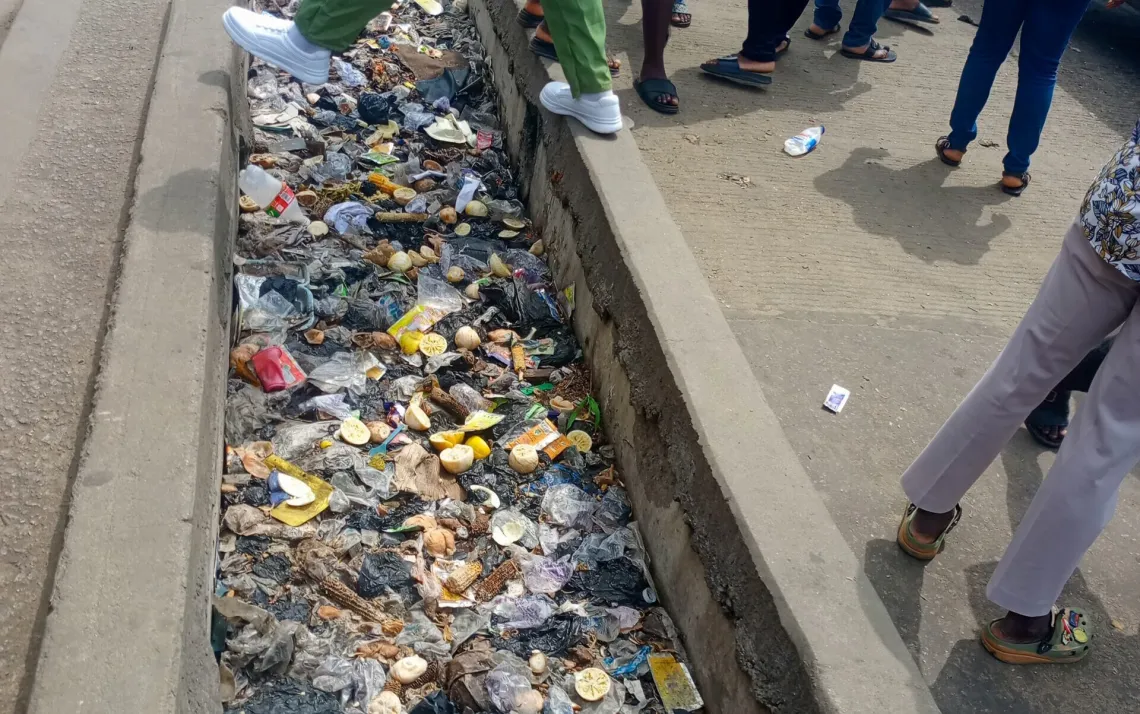
According to Bush-Alebiosu, “it is important to identify what the problem is in the first place, and the problem is nothing other than bad habits.
“I mean, illegal reclamation and illegal dredging affect it on one hand; habits affect it on the other hand.”
“At the end of the day, I mean, those who, out of habit, dump refuse aren’t doing it because they want to make money from it. However, those who are reclaiming illegally are doing it for commercial purposes. So, you have both sides,” he added.
The commissioner cited the dumping of human waste into the lagoon as one example of such bad habits.
“The first thing is that some people even dump faeces into the lagoon and things like that. This is the same lagoon that feeds us. You know you’re eating fish that’s feeding off feaces.”
“So all of these things eventually will come back to bite us, and this is just a typical example of what we’re seeing at the moment.”
In recent weeks, persistent rainfall has led to floods in several parts of Lagos State, leaving residents stranded and movement grounded.
Footage and pictures of the flooding circulated on social media, with many Lagosians calling on authorities to address the challenge.
Earlier, Umahi disclosed that President Bola Tinubu directed an inspection of the Coastal Highway project following reports on social media that the construction had triggered flooding in Lagos.
He spoke on Monday when he and some members of the National Assembly paid a courtesy visit to the Lagos governor.
The works minister described such narrative as false, pointing out that flooding had been recorded in several parts of Nigeria and had already been forecast in at least 22 states across the country.
According to him, “We were concerned about the negative narrative on social media claiming that the coastal highway caused flooding in Lagos.
“The president directed us to come with members of the national assembly to assess the situation ourselves.”
He explained that the highway was intentionally elevated to withstand ocean surges and protect the corridor from flooding for the next two to three decades.
Umahi added that the affected communities were swampy before construction began, arguing that buildings erected below approved flood levels would remain vulnerable regardless of the highway project.
On his part, Governor Sanwo-Olu said flooding in Lagos is largely a consequence of the state’s coastal geography rather than the ongoing highway construction.
He said Lagos occupies less than 0.4 percent of Nigeria’s landmass, with about one-third of the state covered by water, making seasonal flooding an environmental reality.
The governor said heavy rainfall could temporarily overwhelm drainage systems, pointing out that the floodwaters often recede after a short period.
“Lagos is a coastal city. When people say Lagos has flooded, without mincing words, we will always experience some level of flooding. We only pray that it will not be severe,” he said.
Sanwo-Olu accused some social media users of circulating images taken during peak flooding to create a misleading impression of the situation.
He also blamed the indiscriminate dumping of refuse for worsening flooding, saying blocked drainage channels remain one of the leading causes of urban floods in the state.
He maintained that the state government would continue enforcing environmental regulations, including its ban on styrofoam, while introducing additional measures to protect drainage infrastructure.
“We cannot allow social media to define who we are. That does not mean we ignore our challenges. Whenever there are problems, we must confront them and solve them, but we must also understand the realities of our environment,” he said.