



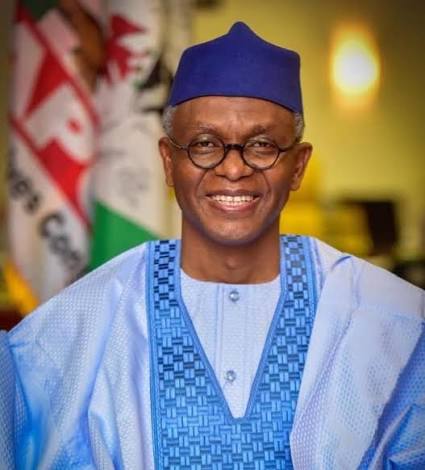
Fresh reactions have continued to trail the investigation involving former Kaduna State Governor Nasir El-Rufai after his son, Bello El-Rufai, raised concerns over what he described as the need to fully protect constitutional rights during the ongoing probe by the Independent Corrupt Practices and Other Related Offences Commission, ICPC.
The lawmaker representing Kaduna North Federal Constituency has insisted that every Nigerian, regardless of status or political background, is entitled to fair treatment under the law. He stressed that his father’s decision not to respond to some questions during interrogation should not be interpreted as wrongdoing, noting that the Constitution clearly protects citizens from self-incrimination.
His comments have shifted public attention from the investigation itself to a wider legal conversation about due process and the limits of investigative powers in a democratic system.
Reports surrounding the probe indicate that the former governor chose to withhold further comments during questioning based on legal advice. Sources close to the matter say El-Rufai believes that if there are credible allegations against him, they should be presented before a court where evidence can be examined openly rather than through prolonged interrogation processes.
Bello El-Rufai’s response has drawn interest from legal observers who argue that the right to remain silent is a fundamental constitutional protection that exists to prevent abuse during criminal investigations.
According to legal experts, the burden of proof in any criminal case lies with investigators and prosecutors, not the accused. This means anti-graft agencies are expected to establish evidence through lawful investigations rather than compelling statements from suspects.
This principle remains central to democratic justice systems across the world and is considered a safeguard against intimidation or forced confessions.
The debate has become more significant because it touches on broader concerns about how anti-corruption agencies operate when dealing with politically exposed individuals.
Nigeria’s anti-corruption bodies have often been praised for pursuing accountability, but they have also faced criticism whenever investigations appear politically charged or lacking procedural balance.
For many Nigerians, the present situation raises an important question about whether anti-corruption efforts can remain effective while fully respecting constitutional freedoms.
The ICPC has maintained that its investigation is strictly professional and based on issues connected to decisions taken during El-Rufai’s time as governor of Kaduna State.
The commission insists that no citizen is above investigation and that public officials must be held accountable where evidence suggests possible misconduct.
That position aligns with growing calls across the country for stronger institutional oversight and greater accountability in public service.
Still, critics argue that accountability must never override due process.
They warn that if constitutional rights are weakened during investigations, public trust in the justice system could suffer serious damage.
For them, the credibility of any anti-corruption case depends not only on the allegations involved but also on how investigators conduct themselves throughout the process.
Nasir El-Rufai’s political profile has added another layer of attention to the matter.
As one of Nigeria’s most outspoken political figures, his career has often attracted both strong support and criticism.
He played a major role in shaping national political discussions during his years as governor and was once seen as a key figure within the ruling All Progressives Congress.
However, political developments in recent years changed that relationship.
His failed ministerial nomination and later criticism of the current administration created visible distance between him and the political establishment he once helped strengthen.
Because of this history, some of his supporters believe the probe may be influenced by politics rather than purely legal concerns.
Others strongly reject that suggestion, arguing that public office holders should face investigation whenever legitimate questions arise about their conduct.
This sharp divide reflects a familiar pattern in Nigeria’s political environment, where legal investigations involving prominent figures often trigger accusations of selective justice or political targeting.
Such perceptions make transparency even more important.
Experts say anti-corruption agencies can protect their credibility by ensuring every action follows established legal procedures and by avoiding steps that create the impression of bias.
Respecting legal representation, avoiding media sensationalism, and allowing courts to determine guilt or innocence remain essential to preserving public confidence.
For Bello El-Rufai, the central issue remains fairness.
He has repeatedly argued that his father deserves the same constitutional protections available to every Nigerian citizen and that exercising legal rights should never be treated as evidence of guilt.
He insists that if authorities believe there is a strong case, it should be tested openly in court rather than shaped through public assumptions.
This position has found support among those who believe constitutional rights become most important when applied in difficult or politically sensitive situations.
Democracy, they argue, is strengthened not when rights are convenient but when they are protected even under pressure.
As the ICPC investigation continues, public attention is likely to remain fixed on how the matter is handled.
The outcome could influence not only El-Rufai’s future but also public confidence in Nigeria’s anti-corruption institutions and judicial process.
Beyond the immediate controversy, the case has reopened deeper conversations about justice, accountability, and the protection of civil liberties in Nigeria’s evolving democracy.
At its core, the issue is not simply about one former governor or one investigation.
It is about whether Nigeria’s legal institutions can demonstrate that constitutional rights and accountability can work side by side.
How the matter unfolds may shape public trust in the rule of law for years to come.