




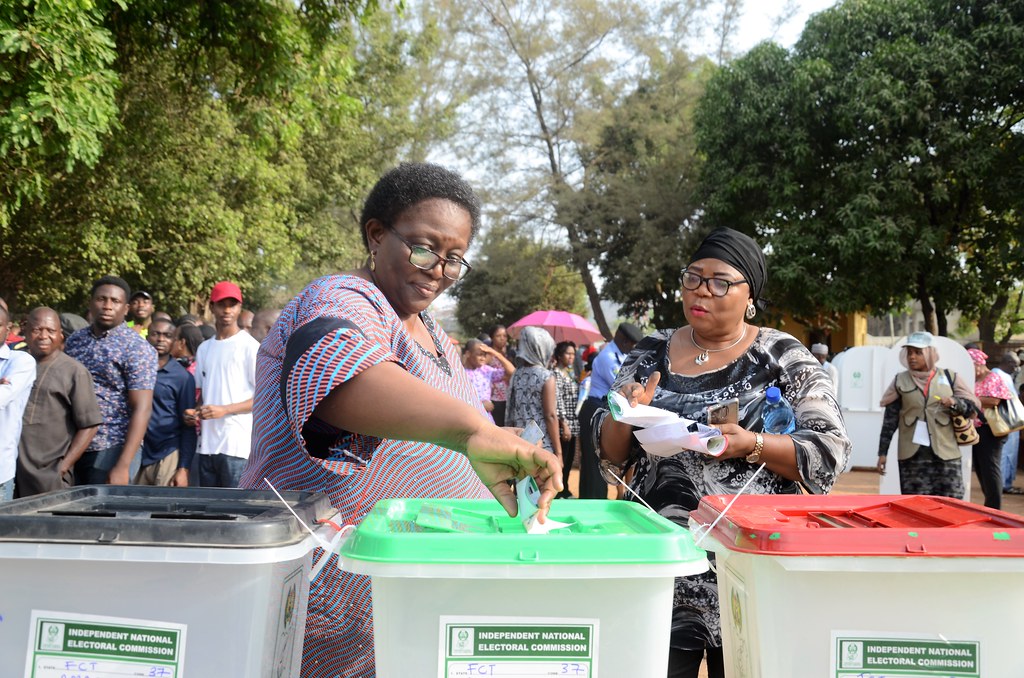
The Independent National Electoral Commission has officially declared the final results of the 2026 Federal Capital Territory Area Council elections, with the All Progressives Congress securing a sweeping victory across most of the councils. Out of the six area councils in the FCT, the APC won five chairmanship seats, while the Peoples Democratic Party claimed one.
The elections, held across Abuja’s six area councils, were closely monitored as a key political test ahead of the 2027 general elections. Voter turnout varied across polling units, with reports of early accreditation in some areas and minor logistical delays in others. However, INEC proceeded with collation and announced winners after results were finalized at the respective collation centers.
In the Abuja Municipal Area Council (AMAC), APC candidate Christopher Maikalangu was re-elected after securing the highest number of votes cast. AMAC remains one of the most politically significant councils in the FCT due to its size and population density, making the victory particularly notable for the ruling party.
The APC also clinched victories in Abaji, Bwari, Kuje, and Kwali area councils. In Bwari Area Council, Joshua Ishaku of the APC emerged winner after polling 18,466 votes. Similarly, Daniel Nuhu won the Kwali chairmanship seat with 17,032 votes, while Danjuma Shekwolo secured victory in Kuje with 17,269 votes.
Umar Abdullahi Abubakar of the APC was declared winner in Abaji.
The PDP’s only win came in Gwagwalada Area Council, where Mohammed Kasim emerged victorious with 22,165 votes. The outcome in Gwagwalada prevented a total sweep by the APC and provided the opposition party with a foothold in the capital territory.
Political observers say the results demonstrate the APC’s strong grassroots mobilization within the FCT, particularly in councils that were previously considered competitive. Analysts also note that local council elections, while smaller in scale than national contests, often serve as indicators of party structures, voter engagement, and campaign effectiveness ahead of larger elections.
The elections were conducted amid heightened public interest, especially following recent debates around amendments to Nigeria’s Electoral Act and discussions about result transmission processes. Civil society organizations and religious bodies had earlier emphasized the need for transparency and credibility in the conduct of elections to strengthen democratic confidence.
While the APC’s dominance in the FCT councils may boost the party’s morale ahead of the 2027 general elections, political analysts caution against drawing broad national conclusions from local government polls. They argue that voting patterns in council elections can differ significantly from state or presidential contests due to localized issues, candidate popularity, and community dynamics.
INEC officials have stated that the electoral process in the FCT was concluded in line with established guidelines. As the focus gradually shifts toward preparations for the 2027 general elections, stakeholders across party lines are expected to intensify mobilization, policy messaging, and strategic positioning.
For residents of the Federal Capital Territory, attention now turns to governance and service delivery at the council level. With chairmen officially declared and sworn in soon, expectations are high for improvements in infrastructure, sanitation, education, healthcare, and community development across the six area councils.
The outcome of the FCT Area Council elections marks an important chapter in Nigeria’s evolving democratic process, highlighting both the competitive nature of local politics and the broader national implications that often follow.

