


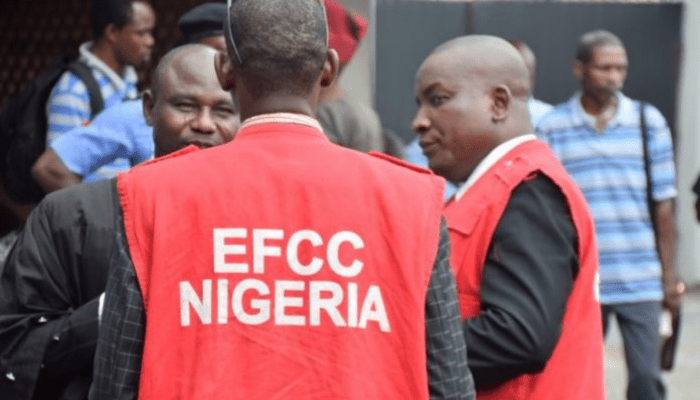
Nigeria’s anti-corruption landscape may be entering a decisive new phase as the Economic and Financial Crimes Commission (EFCC) moves to permanently seize 57 properties allegedly linked to a former Attorney-General of the Federation.
Beyond the headlines, this is not just another enforcement action, it is a strategic signal about where the country’s anti-graft war is heading, what tools are being prioritized, and how power, law, and accountability are being renegotiated at the highest levels.
For years, anti-corruption efforts in Nigeria have often followed a predictable script: dramatic arrests, prolonged court battles, and, in many cases, inconclusive outcomes. What makes this latest move different is the emphasis on asset recovery as the central battlefield. Instead of focusing solely on criminal conviction which can take years and is often bogged down by legal technicalities the EFCC appears to be doubling down on stripping illicit wealth directly through civil forfeiture.
This shift is strategic for several reasons. First, it targets the very incentive structure that fuels corruption. Public office abuse is rarely about ideology, it is about access to wealth. By aggressively pursuing assets rather than just jail terms, the EFCC is attempting to make corruption economically irrational. If illicit gains can be swiftly identified and confiscated, the risk-reward equation changes dramatically.
Second, civil forfeiture cases generally operate on a different legal threshold than criminal trials. While criminal prosecution requires proof beyond reasonable doubt, forfeiture proceedings often rely on the balance of probabilities. This makes it easier for authorities to secure outcomes, especially in complex financial cases where tracing funds across accounts, shell companies, and proxies can take years. In that sense, the EFCC’s move is not just about this particular case, it is about building a more efficient enforcement model.
However, this strategy is not without controversy. Asset forfeiture, especially when tied to politically exposed persons, raises inevitable questions about due process, selective enforcement, and the potential weaponization of anti-corruption tools. Nigeria’s political history is littered with accusations that anti-graft agencies are sometimes deployed against opponents while allies remain untouched. In this context, the seizure of 57 properties tied to a former top legal officer carries symbolic weight and scrutiny.
The office of the Attorney-General is one of the most powerful in the Nigerian system, sitting at the intersection of law, politics, and executive authority. Any action involving a former occupant of that office immediately raises stakes. It challenges not just an individual, but the institutional credibility of the legal system itself. If the allegations are proven and the assets forfeited, it would mark a rare moment of accountability at the very top of Nigeria’s legal hierarchy.
Yet, if mishandled, it could also deepen public cynicism. Nigerians have become increasingly sophisticated observers of anti-corruption narratives. They are no longer satisfied with announcements; they are watching outcomes. Were the assets truly acquired illegally? Will the courts uphold the EFCC’s claims? Will the recovered properties be transparently managed or quietly recycled into new networks of patronage? These are the questions shaping public perception.
From a governance standpoint, the EFCC’s move aligns with a broader global trend. Increasingly, anti-corruption frameworks worldwide are focusing on asset recovery rather than just punishment. Institutions recognize that corruption is fundamentally an economic crime, and dismantling its financial infrastructure is often more impactful than incarcerating individuals.
Nigeria’s renewed emphasis on forfeiture suggests an attempt to align with these global best practices.
There is also a fiscal dimension to consider. Nigeria is under significant economic pressure, with rising debt, inflation, and public demand for improved infrastructure and services. Recovered assets, if properly managed can become a supplementary source of public revenue. However, this is where credibility becomes critical. Without transparent mechanisms for asset management and reintegration into the public purse, forfeiture risks being seen as mere redistribution among elites.
Politically, the timing and scale of this action are significant. Anti-corruption efforts often intensify during periods of political realignment or public pressure. A high-profile case involving dozens of properties sends a message—not just to the public, but to the political class. It signals that certain red lines may be shifting, and that past protections tied to office or influence may no longer be as secure as they once were.
Still, the durability of this message will depend on consistency. One high-profile forfeiture case does not redefine a system. What matters is whether this approach becomes institutionalized, applied across the board regardless of political affiliation, regional ties, or personal networks.
Selectivity would undermine the entire strategy, reinforcing the perception that anti-corruption remains a tool of political convenience rather than a pillar of governance.
Another critical factor is judicial response. Nigeria’s courts play a decisive role in determining whether asset forfeiture becomes a credible enforcement tool or remains a contested tactic. Clear, consistent rulings that balance the rights of defendants with the need for accountability will be essential. If courts are seen as either obstructing or rubber-stamping EFCC actions, public trust could erode further.
The international dimension should not be overlooked either. Nigeria has long faced scrutiny over corruption and financial transparency. High-profile asset recovery cases can strengthen its standing with global partners, particularly in areas like financial intelligence sharing and anti-money laundering cooperation.
Demonstrating the ability to trace, seize, and manage illicit assets enhances credibility and may open doors for greater international support.
Ultimately, the EFCC’s attempt to seize 57 properties linked to a former Attorney-General is more than a legal proceeding, it is a stress test for Nigeria’s anti-corruption architecture. It probes the effectiveness of new strategies, the independence of institutions, and the willingness of the system to hold even its most powerful actors accountable.
If successful, it could mark a turning point, a shift from symbolic enforcement to tangible consequences. If it falters, it risks reinforcing long-standing doubts about the sincerity and effectiveness of Nigeria’s anti-corruption efforts.
For now, the country watches. Not just for the headlines, but for the outcome. Because in Nigeria’s long battle against corruption, credibility is not built on accusations, it is built on results.