
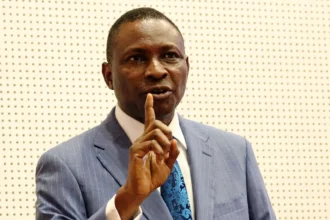



The Department of State Services has arrested a key suspect linked to the 2022 massacre at St. Francis Catholic Church, marking a significant development nearly four years after one of Nigeria’s most tragic attacks on a place of worship. The arrest, which took place on February 25, 2026, represents a renewed push by security agencies to bring those responsible to justice.
Top Society recalls that the attack occurred on June 5, 2022, during a Pentecost Sunday service in Owo, a normally quiet town in southwestern Nigeria. The incident shocked the nation and drew widespread condemnation from religious leaders, civil society groups, and government officials. It also intensified national conversations about security, intelligence gathering, and the protection of vulnerable public spaces.
According to security sources, the newly arrested suspect had been on the radar of intelligence operatives for some time. Authorities reportedly tracked movements and gathered actionable intelligence before carrying out the operation that led to the arrest. The DSS described the suspect as a significant figure connected to the planning and coordination of the attack, although further operational details have not been publicly disclosed due to ongoing investigations.
In the immediate aftermath of the 2022 tragedy, several suspects were apprehended as part of a broader counterterrorism operation. However, security officials acknowledged that some individuals linked to the attack had initially evaded capture. The latest arrest suggests continued surveillance efforts and underscores the long-term investigative strategy adopted by Nigerian security agencies.
Government officials have reiterated their commitment to ensuring accountability, emphasizing that justice may take time but remains a priority. The arrest is being viewed as a sign that authorities are sustaining efforts beyond the initial wave of detentions. Security analysts note that long-term intelligence work is often required in complex cases involving organized extremist networks.
The 2022 attack had profound national implications. It raised concerns about the spread of violent extremism beyond regions historically affected by insurgency. Ondo State, located in Nigeria’s southwest, had not previously experienced an attack of such magnitude. The incident therefore heightened fears about evolving security threats and prompted calls for more robust inter-agency collaboration.
In response to the tragedy, security presence was strengthened across religious institutions and public gatherings in several states. Law enforcement agencies increased patrols and introduced additional monitoring mechanisms aimed at preventing similar incidents. Religious leaders across denominations also encouraged vigilance while promoting unity and resilience within their communities.
The arrest of the suspect years later demonstrates the enduring impact of the case on Nigeria’s security landscape. It also highlights the challenges involved in tracking individuals who may operate within wider extremist networks. Experts in counterterrorism stress that dismantling such networks requires sustained intelligence sharing, community cooperation, and technological support.
Community leaders in Owo have reacted cautiously to the news, expressing hope that the development will provide some measure of closure to affected families. Many residents have continued to call for transparency in the judicial process and thorough prosecution of all those implicated. The case remains deeply personal for the community, where memories of the attack are still vivid.
Legal proceedings are expected to follow as investigators finalize documentation and evidence. Prosecutors will likely rely on intelligence reports, forensic findings, and witness testimonies gathered over the years. The outcome of the case could set an important precedent in Nigeria’s approach to handling terrorism-related offences.
Security observers also note that this development may reinforce public confidence in intelligence operations. While criticism has often focused on response times and preventive measures, the successful tracking and arrest of a suspect years after the incident demonstrates persistence within the system.
Beyond the immediate legal implications, the arrest serves as a reminder of the broader need for sustained security reforms. Experts continue to advocate for improved intelligence coordination, enhanced community policing strategies, and investment in modern surveillance technologies. Addressing root causes of extremism such as economic marginalization and ideological radicalization remains equally crucial.
As Nigeria continues to confront complex security challenges, the February 2026 arrest stands as a significant milestone in a case that shook the nation. While justice processes may still unfold over time, the development signals that efforts to hold perpetrators accountable remain active and ongoing.