




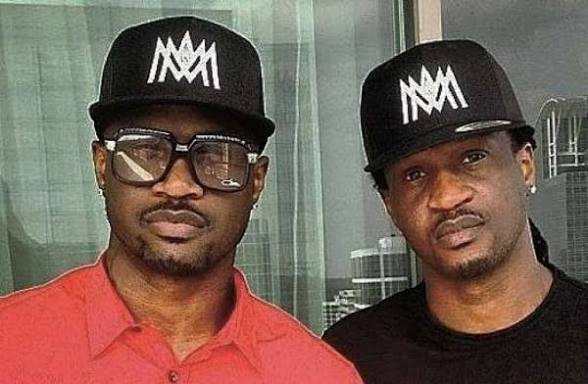
For more than a decade, Peter and Paul Okoye were practically inseparable. They were not just brothers; they were P-Square, one of the biggest music brands to emerge from Nigeria and one of the most successful twin acts Africa has ever produced.
Their identical looks, energetic performances, elaborate music videos and string of hit songs made them a household name across Nigeria and beyond. At their peak, it was difficult to imagine Nigerian pop music without them. Yet behind the fame, wealth and seemingly perfect partnership, cracks were gradually developing, eventually leading to a bitter separation, an emotional reunion and another dramatic breakup.
The story of P-Square is therefore more than the story of two musicians who stopped working together. It is a story about family, fame, money, management, competition, trust and what can happen when a successful family business becomes too complicated for personal relationships to contain.
Peter and Paul grew up in Jos, Plateau State, and developed a passion for music and performance from an early age. Before becoming international stars, the brothers spent years practising their craft and performing together. Their ability to dance and perform as a unit became one of their biggest advantages. They eventually adopted the name P-Square and began building a reputation within Nigeria’s competitive music industry.
Their breakthrough came with a combination of music, dance and visual entertainment that separated them from many of their contemporaries. Songs such as “Do Me,” “No One Like You,” “Beautiful Onyinye,” “Personally,” “Alingo” and “Chop My Money” became major hits, while their albums established them as one of the country’s leading musical acts. They were not simply singers. They were performers whose choreography became an important part of their identity.
Their popularity eventually extended across Africa and into international markets. P-Square performed in different countries, collaborated with international artistes and built a brand that was worth far more than the music they recorded. Their success created endorsement opportunities, concerts, royalties and other commercial ventures. But as the money and influence increased, so did the number of people involved in their business.
Their elder brother, Jude Okoye, became an important figure in managing their career. For years, the family arrangement appeared to work. Jude’s involvement helped the twins navigate the entertainment industry while Peter and Paul concentrated on their music and performances. But family businesses can become complicated when large sums of money are involved, and the success that initially united the brothers eventually exposed differences that had been developing beneath the surface.
The first major public collapse came in 2017. By then, disagreements between the twins had become increasingly difficult to conceal. Their relationship had reportedly been strained by arguments over management, creative issues and other personal matters. Instead of resolving their problems privately, the conflict eventually spilled into public view, with social media becoming a major platform for the disagreement.
Peter announced that he was leaving P-Square and adopted the name Mr P, while Paul continued as Rudeboy. One of Nigeria’s most successful music partnerships had suddenly disappeared.
For fans, the breakup was difficult to understand. P-Square had spent years presenting themselves as a united force, and their entire brand was built around the chemistry between two brothers. Their separation meant that the public was now expected to support two individual careers after becoming accustomed to seeing them as one act.
The breakup also triggered intense speculation about what had caused the disagreement. Their wives were brought into public discussions, while family members became part of the controversy. Some observers blamed marital influence, while others focused on management and creative differences. However, reducing the entire crisis to the involvement of their wives ignores the wider problems that had developed within the family and business structure.
After the separation, both brothers attempted to establish themselves independently. Peter became Mr P, while Paul continued as Rudeboy. Each released music and maintained a successful career, proving that both men had individual talent. However, the public continued to miss the chemistry that had made P-Square special.
For years, fans hoped the twins would put their differences aside. That wish eventually came true in 2021 when Peter and Paul reunited. Their reconciliation was greeted with enormous excitement. Videos and photographs of the brothers together once again generated widespread celebration, while their return to the P-Square name gave fans hope that the difficult chapter was finally over.
But the reunion did not permanently solve the problems between them.
By 2024, the relationship had deteriorated again. P-Square split for a second time, and this time the disagreement became even more serious because allegations concerning money and business management entered the centre of the dispute.
Peter accused Jude Okoye of financial misconduct involving money connected to P-Square’s business interests. Jude denied the allegations, and the matter eventually reached the Economic and Financial Crimes Commission and the courts. Jude and Northside Music Limited were charged over allegations involving approximately N1.3 billion and $1 million. Jude pleaded not guilty.
Because the matter remains a legal case, the allegations should not be treated as established facts. The court will ultimately determine the issues raised in the proceedings. Nevertheless, the dispute demonstrated how far the P-Square crisis had travelled. What had once been a disagreement between brothers was now a legal battle involving financial records, companies and serious allegations.
The court proceedings have also revealed just how complicated the financial arrangements surrounding the family business were. During the proceedings, Peter reportedly acknowledged that he was a co-signatory to a Northside Entertainment account, a development that complicated some earlier claims about who controlled the company’s finances. Such evidence does not determine the outcome of the case, but it highlights why the dispute cannot simply be reduced to a straightforward story of one brother being right and another being wrong.
In 2026, the legal battle was still continuing. Proceedings were reportedly delayed in June after Peter was unable to appear for cross-examination because of a flight issue. The continuing case has kept the family’s financial dispute in the public eye and made another easy reconciliation even more difficult to imagine.
But money is only one part of the P-Square story.
Another issue that has followed the twins throughout their career is the pressure of being constantly compared with one another. Because they were twins, fans often treated them as competitors even while they were members of the same group. Who was the better dancer? Who was the better singer? Who was more talented? Who was more important to P-Square?
Peter has argued that such comparisons contributed to the problems between the brothers. In his view, fans choosing sides created unnecessary competition and ego around a partnership that should have been based on collaboration.
That argument raises an important point about celebrity culture. The public sees performers on stage, but it does not always see the personal pressure behind the performance. Peter and Paul built their careers around being a pair, yet they remained two individuals with different personalities, ambitions and opinions. The challenge was maintaining their individual identities without destroying the partnership that made them famous.
Social media also changed the way their disagreements unfolded. Years ago, family disputes could remain private. In the age of Instagram and other social platforms, a single statement can reach millions of people within minutes. Once one person speaks publicly, the other often feels pressure to respond. Fans then take sides, entertainment blogs publish the statements and a private disagreement becomes a national conversation.
That cycle can make reconciliation much harder because every new statement creates another layer of resentment.
The P-Square story also demonstrates the danger of mixing family and business without strong structures. Family members may begin a business with trust and informal arrangements, but once the organisation becomes financially significant, clear contracts, transparent accounting and defined responsibilities become essential.
Being brothers may create trust, but it does not remove the need for proper business systems.
When everything was working, the family structure around P-Square appeared to be a strength. When the relationship began to deteriorate, however, the same structure became a source of tension. A disagreement between ordinary business partners can end a business relationship. A disagreement between brothers can affect an entire family.
That is perhaps why the P-Square story remains so emotional for Nigerians. Their rise was inspiring because it showed what two brothers could achieve by combining their talents. Their fall is painful because it shows how quickly success can become complicated when trust begins to disappear.
Despite everything, the legacy of P-Square remains powerful. Their music helped shape an important period in Nigerian pop culture and contributed to the growing international visibility of Nigerian music. At a time when Afrobeats had not yet reached the global commercial heights it enjoys today, P-Square were already performing for audiences across Africa and beyond.
They showed that Nigerian artistes could combine local identity with international entertainment standards. Their music videos were ambitious, their choreography was memorable and their concerts attracted huge audiences. They also influenced younger performers who grew up watching them.
The fact that their personal relationship has deteriorated does not erase those achievements.
The difficult question now is whether P-Square can ever return.
Technically, nothing prevents Peter and Paul from working together again. They have already demonstrated that reconciliation is possible. Their 2021 reunion proved that years of separation can be followed by a return to the stage.
But another reunion would require more than nostalgia.
The underlying problems would have to be addressed. Financial arrangements would need to be transparent. Management responsibilities would need to be clearly defined. Personal boundaries would need to be respected, and both brothers would have to rebuild the trust that has been damaged over the years.
Most importantly, they would need to decide whether their relationship as brothers is more valuable than winning their individual arguments.
For now, P-Square remains one of Nigerian music’s most remarkable unfinished stories. The twins who once seemed inseparable are now pursuing separate paths, while their old songs continue to remind fans of the extraordinary period when they ruled the African music scene together.
Their story is ultimately not just about a music group that broke up. It is about what happens when childhood dreams become a major business, when family members become business partners and when fame places private relationships under a microscope.
Peter and Paul built P-Square together, but they also built something bigger: a legacy that remains impossible to separate from the story of their brotherhood.
Whether they ever perform together again is uncertain. What is certain is that their music has already secured its place in Nigerian entertainment history.
P-Square’s rise showed the power of unity. Their fall showed the danger of unresolved conflict. Their brief reunion showed that forgiveness is possible, while their second breakup demonstrated that forgiveness alone may not be enough.
In the end, the biggest loss may not be another P-Square album.
It may be the relationship between two brothers who once had the world dancing together.

