






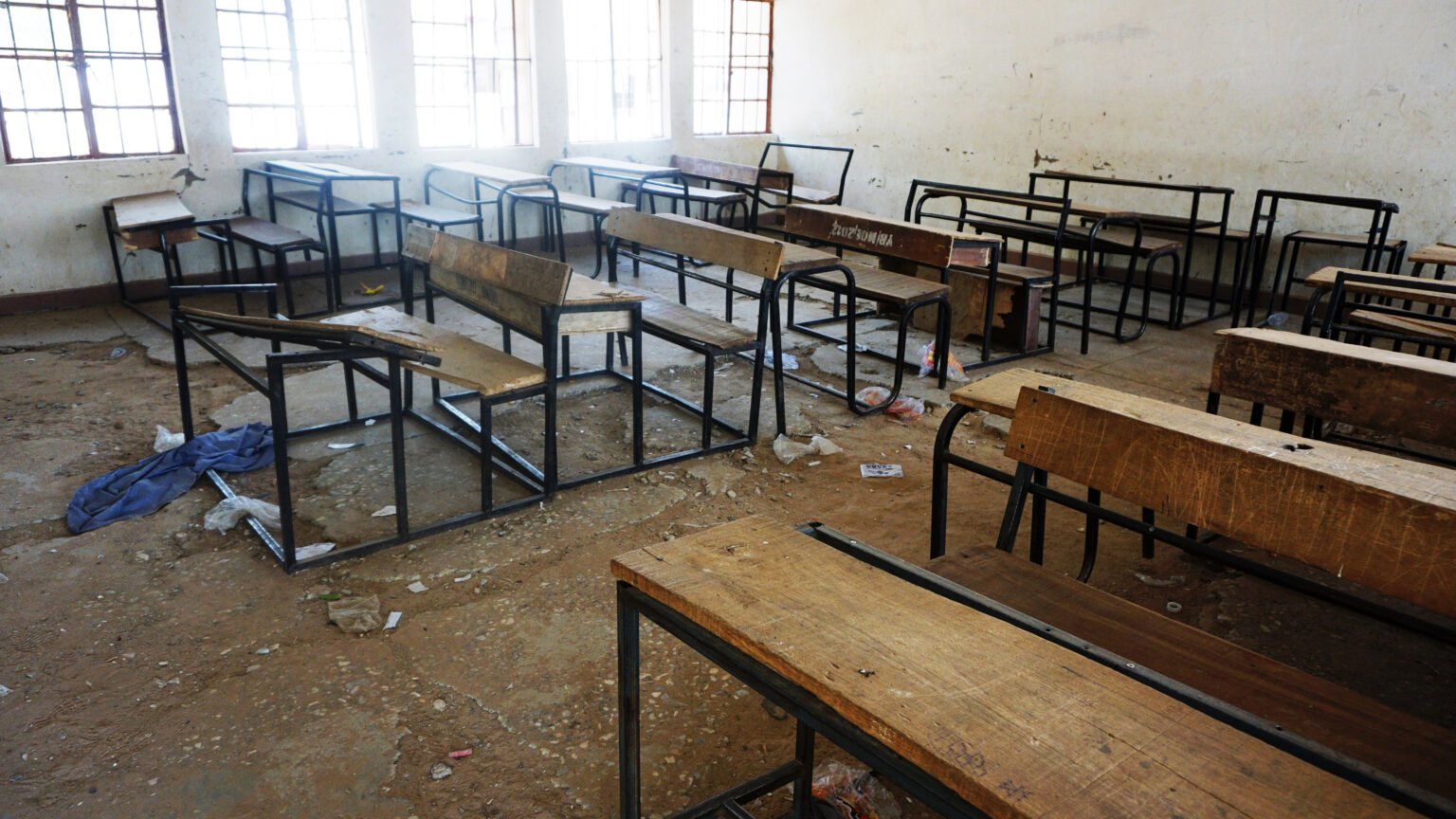
Fear of abduction and growing insecurity are emerging as major threats to school enrolment and attendance across Nigeria, as recurring rumours of attacks on educational institutions continue to trigger panic among parents, pupils and school authorities.
The latest incident occurred on June 10, 2026, when reports circulated in parts of Minna, Niger State, alleging that bandits had attacked schools and abducted pupils.
Although security agencies later dismissed the claims as false, the rumours sparked widespread panic, forcing parents to abandon work and rush to schools to retrieve their children.
The incident exposed the deep anxiety that now surrounds school safety in many parts of the country, where memories of past mass abductions continue to shape public reactions.
Among those affected was pupil Fatima Erena, who recalled the fear that gripped her family during the scare.
“I didn’t go to school that Wednesday because I was sick, but my heart was beating fast for my mother to go and pick up my younger brother,” she said.
The rumours spread rapidly across Bosso, Kpakungu, Sabon-Wuse and Lambata communities, causing confusion in schools as teachers struggled to manage frightened pupils.
Students told DAILY POST that school authorities informed them of the reports between 1 p.m. and 2 p.m., leading to scenes of panic as children cried, ran in different directions and anxiously waited for their parents.
Teachers were also faced with the challenge of communicating the information without worsening the situation.
Mrs Aina Ayodele, a teacher, said educators immediately contacted parents while ensuring pupils remained under supervision.
“When the information came, we initially didn’t know how to inform the children because we knew the fear and panic it would cause. We called their parents to come for them while we watched over them,” she said.
Outside school premises, worried parents flooded roads leading to schools, travelling by motorcycles, tricycles, taxis and on foot.
One parent, Hajiya Aisha, described the frantic rush to secure her children.
“When I got the call from the school, I rushed out with only a wrapper tied around my chest. Halfway, I realised I was not properly covered and had to return to pick my hijab. My heart was beating so fast. All I cared about was the safety of my children,” she recounted.
As panic spread, many schools reportedly shut their gates, restricted movement and suspended shuttle services, requiring parents and authorised guardians to personally collect pupils.
Although authorities later debunked the reports, the psychological impact lingered. Several parents kept their children at home for days, while attendance dropped significantly in some schools.
Pupils interviewed admitted they remained shaken by the experience, saying discussions about insecurity still remind them of the incident.
Many parents said their fears were rooted in Nigeria’s history of school kidnappings, including high-profile abductions in Kagara, Tegina, Afaka and several other communities across the country.
Some disclosed that insecurity had already influenced their educational choices, with many opting for day schools instead of boarding institutions.
“I don’t want my blood pressure to run high because of sending my child to boarding school. That is why I chose schools in Minna where I can see my children every day,” said Mrs Hanatu Musa.
Security expert and Professor of Criminology, Emmanuel Musa, said the reactions were understandable given the country’s history of attacks on schools.
“Communities are reacting based on experience. When people have seen attacks on schools in different parts of the country, they are more likely to take every warning seriously,” he said.
Counselling psychologist, Mrs Mercy Amina Elaigwu, warned that repeated security scares could leave lasting psychological effects on children, affecting their sense of safety and willingness to attend school.
Following the incident, the Niger State Police Command described the reports as false and misleading, assuring residents that investigations found no evidence of attacks on schools.
Police spokesman, SP Wasiu Abiodun, said officers had visited affected communities and confirmed that schools remained safe.
Similarly, the Niger State Ministry of Basic and Secondary Education urged parents to disregard the rumours, insisting that schools were under constant monitoring and that security measures had been strengthened.
However, what happened in Minna reflects a broader national challenge. Similar fears and security-related disruptions have been reported in states including Edo and Enugu, where rumours and threats have also unsettled school communities.
Education experts warn that beyond actual attacks, the growing climate of fear poses a serious challenge to learning and enrolment.
With Nigeria already accounting for about 18.3 million out-of-school children, according to UNICEF, concerns are mounting that insecurity and persistent fears of kidnapping could further worsen educational access and attendance.
For many parents, the issue is no longer whether every rumour is true or false, but whether they can afford to ignore it.
As one parent asked after the Minna scare: “What if it had turned out to be true?”
Until confidence in school safety is fully restored, fear itself may remain one of the biggest obstacles confronting education in Nigeria.

