





The Defence Headquarters has moved to dismiss growing public speculation suggesting that the Nigerian Armed Forces may be involved in actions capable of undermining the country’s democratic structure.
In a firm response, military authorities reiterated that the armed forces remain fully committed to constitutional governance, civilian leadership, and the protection of Nigeria’s democratic institutions.
The clarification comes amid circulating concerns and interpretations of recent security developments, which some observers had linked directly or indirectly to the role of the military in internal stability operations. These concerns, according to the Defence Headquarters, are being misread and misrepresented, creating unnecessary tension in the public space.
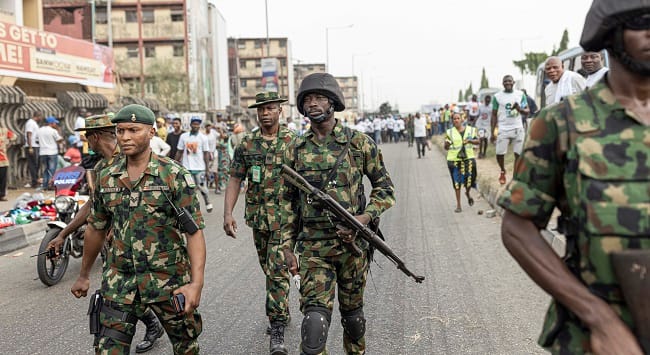
The military stressed that its core responsibility remains the defence of Nigeria’s territorial integrity, support for civil authorities in maintaining law and order, and participation in joint operations aimed at combating insurgency, terrorism, and other forms of violent crime. Officials emphasized that none of these responsibilities extend to political interference or democratic disruption.
At the center of the response is a strong reassurance that the Armed Forces operate strictly under constitutional provisions. The leadership noted that Nigeria’s democracy is built on a framework that clearly defines the separation of powers between elected officials and security institutions. According to this structure, the military is subordinate to civilian authority and is expected to act only within approved legal and operational boundaries.
The Defence Headquarters further explained that routine security operations, including checkpoints, counter-terrorism missions, and intelligence-driven interventions, should not be mistaken for political maneuvering. Instead, such actions are part of ongoing efforts to stabilize volatile regions and protect citizens from threats posed by armed groups and criminal networks.
In recent weeks, discussions in public forums and online platforms have intensified, with some commentators suggesting possible military overreach in certain operational environments.
However, military officials insist that these interpretations are inaccurate and do not reflect the true nature of ongoing security engagements.
They argue that the Armed Forces of Nigeria have consistently demonstrated professionalism, particularly in transitional periods and during sensitive national events.
The institution pointed to its historical record, noting that in recent decades, the military has largely remained in its constitutional role, supporting democratic transitions rather than disrupting them.
The Defence Headquarters also highlighted ongoing reforms within the armed forces aimed at strengthening accountability, discipline, and adherence to human rights standards during operations. These reforms, according to officials, are part of a broader effort to align military conduct with international best practices and democratic expectations.
Security analysts have long noted that Nigeria’s complex security environment often places the military at the forefront of internal operations, especially in regions affected by insurgency or banditry. This operational reality, while necessary for national stability, sometimes leads to misunderstandings among civilians who may interpret visible military presence as political involvement.
However, the military has consistently maintained that operational visibility does not equate to political intent.
Instead, it reflects the demands of addressing security challenges that require coordinated and sometimes large-scale deployment of personnel.
The Defence Headquarters reiterated that all actions taken by the Armed Forces are guided by directives from legitimate civilian authorities. This includes coordination with the Presidency, the Ministry of Defence, and other security agencies under established national security frameworks.
It also reaffirmed that military leadership remains focused on professionalism and discipline across all ranks. Officers and personnel are regularly reminded of their constitutional obligations, particularly the requirement to remain apolitical and respect democratic processes at all times.
The statement serves as both clarification and reassurance to Nigerians who may be concerned about the stability of the country’s democratic order. It underscores the importance of trust between the public, civil institutions, and the military in maintaining national cohesion.
The Defence Headquarters further cautioned against the spread of misinformation, noting that inaccurate narratives about military intentions can heighten public anxiety and potentially undermine confidence in national institutions. It encouraged citizens to rely on verified information and official communication channels when interpreting security-related developments.
Beyond immediate clarification, the statement reflects a broader commitment by the armed forces to reinforce civil-military relations in Nigeria. Building trust between security institutions and civilians remains a critical component of national stability, especially in a diverse and politically dynamic environment.
Observers note that such assurances are particularly important in a period where misinformation can spread rapidly through social media and other informal communication channels. In such contexts, official clarifications play a key role in preventing misinterpretation and maintaining calm.
The Defence Headquarters concluded by reaffirming its unwavering loyalty to the Nigerian Constitution and its commitment to safeguarding the nation’s democratic system. It emphasized that the military has no role in governance beyond what is defined by law and that it remains fully aligned with civilian leadership.
As Nigeria continues to navigate its complex security landscape, the balance between effective military operations and public perception remains crucial. The latest statement from the Defence Headquarters is aimed at reinforcing that balance and ensuring that the Armed Forces are viewed within their proper constitutional role.
Ultimately, the message is clear: the military sees itself not as a political actor, but as a professional institution dedicated to protecting the nation and supporting the democratic system under which it operates.

