


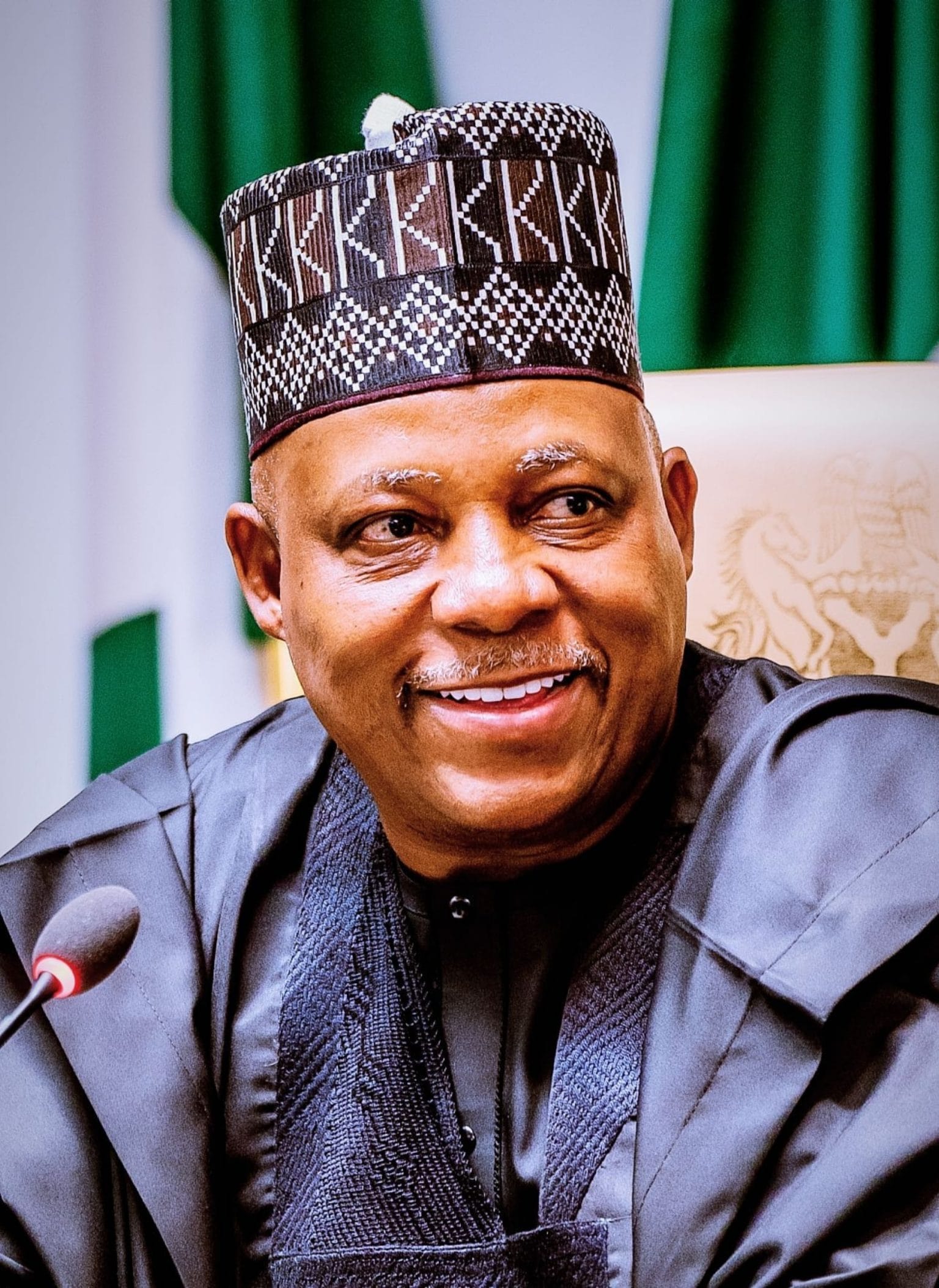
As economic pressures continue to weigh heavily on households and businesses across Nigeria, Kashim Shettima has stepped forward with a message of reassurance: the current hardship, he insists, is temporary, and the reforms underway will ultimately deliver long-term benefits.
It is a message that has become increasingly familiar in Nigeria’s policy landscape one that seeks to balance honesty about present difficulties with optimism about the future.
Speaking amid rising inflation, currency instability, and the high cost of living, Shettima’s remarks are clearly aimed at calming public anxiety while reinforcing confidence in the administration of Bola Ahmed Tinubu. The government’s economic reform agenda, which includes fuel subsidy removal, exchange rate adjustments, and structural changes in key sectors, has been widely acknowledged as bold but painful. For many Nigerians, however, the immediate reality is defined less by long-term projections and more by daily struggles to afford basic necessities.
Shettima’s argument rests on a familiar economic principle: that structural reforms often come with short-term disruptions before yielding sustainable growth. By removing fuel subsidies, for instance, the government aims to free up fiscal resources and reduce distortions in the economy. Similarly, exchange rate reforms are intended to create a more transparent and market-driven system that can attract investment. In theory, these measures lay the groundwork for a more resilient and diversified economy.
Yet, the challenge lies not in the logic of the reforms, but in the lived experience of citizens. Inflation has eroded purchasing power, transportation costs have surged, and small businesses are grappling with rising operational expenses. For many, the promise of future benefits feels distant compared to the immediacy of economic hardship. This gap between policy intent and public perception is where Shettima’s reassurance faces its greatest test.
Strategically, his statement can be seen as part of a broader effort to manage expectations and maintain social stability. Economic reforms, particularly those that remove long standing subsidies, often risk triggering public discontent if not accompanied by clear communication and visible support measures. By emphasizing that the hardship is temporary, the government is attempting to buy time, time for the reforms to take effect, and time to demonstrate tangible improvements.
However, reassurance alone is unlikely to be sufficient. For the message to resonate, it must be backed by concrete actions that ease the burden on citizens. Social safety nets, targeted subsidies, and support for small businesses will play a crucial role in bridging the gap between short-term pain and long-term gain. Without these measures, the narrative of “temporary hardship” risks being perceived as disconnected from reality.
There is also a political dimension to Shettima’s remarks. Public confidence in economic leadership is a critical factor in sustaining reform momentum. If citizens believe that the government has a clear plan and the competence to execute it, they are more likely to endure short-term sacrifices. Conversely, if trust erodes, even well-designed policies can face resistance. In this sense, Shettima’s reassurance is not just an economic statement but a political one, an attempt to reinforce credibility and maintain public support.
Another important factor is the timeline of these promised benefits. Economic reforms rarely produce immediate results, but prolonged hardship without visible progress can strain public patience. Nigerians have experienced multiple waves of reforms in the past, often accompanied by similar promises of future prosperity. This history makes skepticism a natural response, and it places additional pressure on the current administration to deliver measurable outcomes within a reasonable timeframe.
At the same time, there are early indicators that the government may point to as signs of progress. Increased investor interest, efforts to stabilize the currency, and initiatives in key sectors such as power and infrastructure suggest a broader strategy aimed at economic transformation. If these efforts begin to translate into job creation, improved services, and lower costs, they could help validate Shettima’s message.
Ultimately, the Vice President’s reassurance reflects a critical moment in Nigeria’s economic journey. The country stands at a crossroads, where difficult decisions are being made in the hope of achieving long-term stability and growth. Whether these decisions will deliver on their promise remains to be seen, but what is clear is that public trust will be the determining factor.
For now, Nigerians are being asked to endure, to accept that the current hardship is part of a necessary transition. The success of this narrative will depend not just on words, but on results. If the reforms lead to a more stable economy, improved living standards, and greater opportunities, Shettima’s assurance will be remembered as a moment of honest leadership. If not, it risks becoming another entry in a long list of unfulfilled promises.
In the end, the phrase “temporary pain, future gain” carries both hope and uncertainty. It captures the essence of the government’s economic strategy, but it also highlights the delicate balance between policy ambition and public reality. As the reforms unfold, the true test will not be in the rhetoric, but in whether Nigerians begin to feel the promised benefits in their everyday lives.