






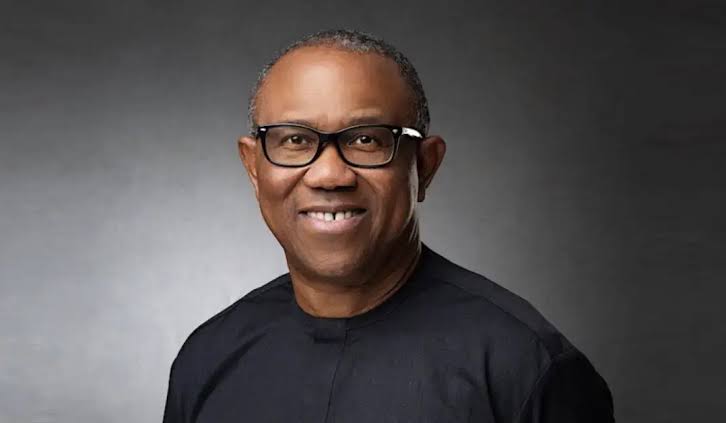
Former presidential candidate Peter Obi has stirred fresh national conversation after declaring that he and other opposition leaders would accept the outcome of the 2027 presidential election even if it favors President Bola Tinubu provided the process guarantees real-time electronic transmission of results directly from polling units.
His statement, delivered during a protest at the National Assembly in Abuja, has quickly become a focal point in Nigeria’s growing debate over electoral transparency and reform. Obi’s position signals not just political rivalry, but a broader demand for structural changes in how election results are recorded and transmitted across the country.
Standing alongside civic activists and reform advocates, Obi emphasized that the credibility of any election lies in the clarity of its process. According to him, disputes surrounding previous elections have often centered not merely on who won, but on how results were collated and announced. He argued that mandating real-time electronic transmission would significantly reduce suspicion, eliminate unnecessary delays, and strengthen public trust in the democratic system.
Top Society recalls that former Anambra State governor made it clear that his stance is not about personalities or party advantage. Instead, he framed the issue as one of institutional integrity. In his view, when citizens can see results uploaded instantly from polling units to a central, publicly accessible platform, the room for manipulation narrows considerably. Transparency, he suggested, protects both winners and losers by ensuring that the process speaks louder than political rhetoric.
Obi’s remarks come amid ongoing deliberations at the National Assembly over proposed amendments to the Electoral Act. A key point of contention in the legislative review is whether the law should explicitly require results to be transmitted in real time or leave the timing and method at the discretion of the electoral commission.
Supporters of a mandatory real-time clause argue that technology has evolved sufficiently to support nationwide electronic uploads. They believe that embedding the requirement clearly in law would eliminate ambiguity and close gaps that could otherwise be exploited. For them, transparency is not optional, it must be guaranteed by legislation.
On the other side of the debate, some policymakers have expressed concerns about rigid language that could create legal complications if technical challenges arise in remote areas. They suggest that flexibility allows the electoral body to adapt to infrastructural realities. However, critics counter that technological hurdles should be addressed through preparation and investment, not by weakening the clarity of the law.
By stating that he would accept a Tinubu victory under a transparent system, Obi positioned himself as advocating for process over outcome. Political observers note that this framing shifts the conversation from rivalry to reform. It underscores the idea that democratic stability depends less on who wins and more on whether the system commands confidence.
The protest itself drew attention not only for its message but also for what it represents increasing civic engagement around electoral accountability. In recent years, Nigerians, particularly young voters, have shown heightened interest in how elections are conducted. Digital platforms have amplified calls for openness, while public scrutiny of institutions has intensified.
For many citizens, the debate over real-time transmission is symbolic of a larger struggle to strengthen democratic institutions. Transparent elections are widely viewed as essential for political stability, economic confidence, and national unity. Where electoral processes are trusted, governance gains legitimacy. Where doubts persist, tensions often follow.
Obi’s statement also reflects the strategic importance of the 2027 elections. Although the next presidential race is still some time away, early positioning and policy debates are already shaping the political landscape. By focusing on electoral reform now, opposition figures appear determined to influence the rules of engagement well ahead of campaign season.
Analysts suggest that the harmonization process between both chambers of the National Assembly will be decisive. If lawmakers adopt explicit real-time transmission language, it could mark a significant shift in Nigeria’s electoral framework. If not, advocacy groups are expected to sustain pressure through public engagement and organized action.
Beyond party politics, the unfolding debate highlights a deeper national question: how can Nigeria continue strengthening its democratic institutions in a rapidly evolving technological era? As electronic systems become more integrated into governance worldwide, expectations for transparency naturally increase.
Obi’s position taps into this broader expectation. By publicly stating his willingness to accept any credible outcome, he challenges both supporters and opponents to prioritize systemic trust over partisan gain. It is a message designed to resonate beyond political lines one that appeals to citizens who desire certainty that their votes count exactly as cast.
As discussions continue within legislative chambers, Nigerians across the country are watching closely. The outcome of this reform debate could shape not only the conduct of the 2027 election but also the long term trajectory of democratic accountability in Africa’s most populous nation.
For now, one message stands at the center of the conversation: in a democracy, transparency is power and the credibility of the next election may depend on how clearly that principle is written into law.

