




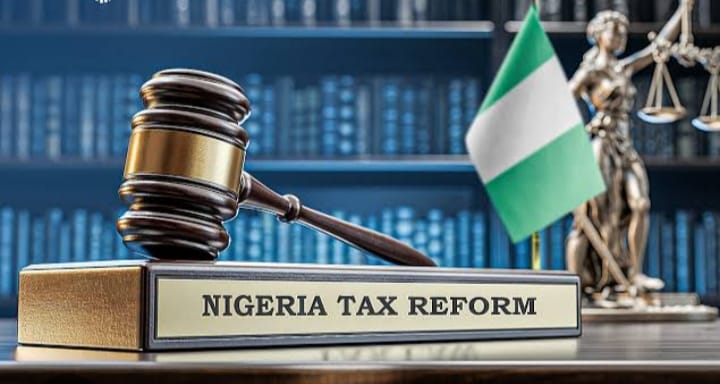
Anxiety and mistrust continue to surround Nigeria’s proposed tax reforms, reflecting deeper structural problems in the country’s fiscal system rather than a clear understanding of the policy changes themselves.
Public concern stems largely from years of weak revenue performance, widespread tax evasion by wealthy individuals, persistent inequality, and a system that has historically relied on indirect taxes that burden the poor. As the reforms approach implementation, many Nigerians fear higher taxes, rising inflation and increased economic hardship. However, available evidence suggests the reforms are aimed less at raising rates and more at fixing long-standing weaknesses in revenue collection and fairness.
The government has described the reforms as a bold effort to modernise the tax system, expand the revenue base and support long-term economic growth. Analysts note that mistrust, poor governance, bribery and complex tax rules have discouraged compliance, particularly with direct taxes, forcing authorities to depend heavily on indirect taxes that disproportionately affect low-income earners.
Although the reforms may not immediately resolve these challenges, they establish a legal framework that empowers regulators, civil society and the media to demand gradual but meaningful change. For the first time, tax authorities are intentionally pursuing a progressive personal income tax system, exempting individuals earning ₦800,000 or less annually. While critics argue that the threshold is too low, experts say it signals a shift toward a more equitable tax structure.
Given Nigeria’s high propensity to consume, allowing low-income earners to retain more disposable income could boost consumption, stimulate production and offset revenue losses from higher taxes on wealthier individuals. More balanced income distribution is also expected to support productivity and encourage greater participation in the formal economy.
Nigeria’s need for reform is underscored by weak revenue performance. As of 2023, tax revenue stood at about 10 per cent of GDP, far below Africa’s average of 17 per cent and the OECD average of around 30 per cent. This underperformance has contributed to severe fiscal stress, with debt servicing consuming over 90 per cent of government revenue.
Economists warn that such a high debt service burden leaves little room for development spending and increases the risk of fiscal collapse. In recent years, poor revenue mobilisation has forced the government to rely heavily on borrowing, undermining its ability to fund infrastructure and essential services. Estimates suggest Nigeria faces an annual infrastructure gap of about $100 billion.
Budget implementation challenges further expose fiscal weakness. The 2024 budget has been extended into late 2025, while the start of the 2025 capital budget was delayed, leaving contractors unpaid and prompting protests. These pressures highlight the urgency of reform to prevent deeper financial instability.
According to the Chairman of the Presidential Committee on Fiscal Policy and Tax Reforms, Taiwo Oyedele, failure to act could result in zero capital expenditure, debt service exceeding GDP and unsustainable reliance on central bank financing. Past dependence on money creation has already contributed to high inflation, which peaked above 34 per cent last year, effectively acting as a hidden tax on ordinary Nigerians.
Without reform, projections by the World Bank suggest Nigeria’s debt service to GDP ratio could reach 127 per cent by 2027. Policy simulations also warn that fiscal shocks, such as subsidy collapse, could trigger runaway inflation.
Importantly, the reform agenda does not focus on aggressive tax increases. Instead, it prioritises widening the tax base, improving compliance and closing loopholes exploited by high-income earners.
Currently, fewer than 30 million Nigerians are registered taxpayers, despite an estimated 70 million economically active adults, indicating significant untapped revenue potential.
Concerns that the reforms will hurt businesses may overlook the current reality of multiple taxation, informal levies and arbitrary enforcement. Harmonising taxes across federal, state and local governments could reduce compliance costs and improve efficiency. Digitalisation of tax administration is also expected to limit human discretion, reduce harassment and benefit small businesses.
Under the new framework, small businesses with turnover below ₦100 million are exempt from company income tax and capital gains tax, while essential sectors such as agro-allied industries are also excluded, reinforcing the progressive intent of the reforms.
Despite these provisions, anxiety remains strongest among low-income earners. Market analysts attribute this to rumours of increased tax burdens and fears that mandatory Tax Identification Numbers and bank account linkages could be abused by corrupt officials. However, authorities note that bank-TIN linkage has existed since 2019 without evidence of arbitrary deductions from personal accounts.
Officials insist that mass tracking of individual bank accounts would be inefficient and violate basic principles of tax collection. Instead, the focus is on identifying significant evasion patterns while keeping enforcement costs low.
The reforms also aim to correct Nigeria’s heavy reliance on indirect taxes by strengthening personal and corporate income tax systems and preserving exemptions for basic consumption. This shift is intended to place a greater burden on high earners and profitable sectors that have historically remained outside the tax net.
Beyond revenue generation, the reforms could strengthen fiscal federalism by improving internally generated revenue at state and local levels, where public services are delivered and accountability is most visible.
Nevertheless, public scepticism remains rooted in past failures, where higher revenues did not translate into better infrastructure, healthcare or education. Stakeholders stress that transparency, credible reporting and a clear link between taxes paid and services delivered are essential to rebuilding trust.
Despite legitimate concerns, analysts warn that outright rejection of tax reform could prove costly.
With Nigeria’s fiscal position increasingly fragile, global institutions such as the World Bank and IMF caution that without decisive action to boost non-oil revenue, the country faces difficult choices between rising debt, austerity or prolonged economic stagnation.

